Paid ads outperform SEO when you need revenue this week, not next quarter—I’ve seen properly configured campaigns generate leads within days while organic efforts take months to mature. You’ll want PPC for immediate visibility, high-intent commercial keywords, and industries like higher education where targeted messaging drives faster conversions. However, paid customers churn 5-7% monthly compared to organic’s stickier base, so you’re trading speed for lifetime value. SEO wins for B2B research phases, trust-building, and compound cost reductions that hybrid strategies can achieve. The real skill lies in knowing which channel serves your timeline, and there’s more to unpack about making them work together rather than picking sides.
TLDR
- PPC generates immediate revenue within days, while SEO requires months to show financial returns.
- High-intent industries like higher education and B2B technology see faster conversions through paid search targeting.
- PPC search term reports reveal conversion-driving keywords that SEO intuition often misses entirely.
- Paid ads stop working when budgets pause, but organic builds lasting authority and compound value.
- Paid customers churn 5-7% monthly faster than organic, doubling true acquisition costs over time.
The Speed Test: When PPC Beats SEO for Immediate Revenue

How quickly do you need revenue flowing through your business?
I’ve seen properly configured PPC campaigns generate leads within the first week, while SEO typically needs months before showing financial returns. When you’re launching a new product or facing time-sensitive deadlines, paid ads deliver immediate visibility at the top of search results. Traffic appears within hours, not quarters. In a recent campaign analysis, a £11,000 monthly PPC budget generated approximately 2,800 clicks and immediate conversions, whereas the comparable SEO effort required six months of ramp-up to reach similar traffic levels. Be mindful that third-party extensions can affect site load and rankings, so evaluate plugin performance impact before relying on organic traffic.
From Clicks to Content: What PPC Data Reveals About SEO Keywords
You can stop guessing which keywords actually drive revenue by mining your PPC search term reports for conversion data that SEO intuition alone won’t reveal. I’ve watched too many teams chase vanity traffic while their paid campaigns quietly prove which terms carry real purchase intent—information you can use to prioritise organic content that converts rather than just ranks. The gap between your high-performing paid keywords and your current organic rankings isn’t a failure; it’s a roadmap of proven opportunities waiting for the right content. Unlike SEO’s months-long timeline to meaningful results, PPC provides immediate traffic and performance data that lets you validate keyword potential in days rather than guessing for quarters. Local businesses often rank for keywords that bring traffic but little value, so use paid data to focus on purchase intent when reshaping organic targeting.
High-Intent Keywords
Where exactly should you focus your keyword efforts when every search term seems to promise traffic, but only a handful actually deliver buyers? I’ve watched clients burn through budgets chasing “running shoes” while “best running shoes for flat feet” quietly converts at 2.5× the rate. You want the 56% of buyers using three-plus words, not the 7% typing one word and browsing. Long-tail precision beats generic volume every time—yes, even when your competitor’s “impressive” traffic reports suggest otherwise.
Conversion Patterns
Why do your best-performing PPC landing pages rarely get the SEO attention they deserve? I’ve watched teams pour budget into ads while ignoring conversion gold sitting in their own data. Your PPC search term reports reveal exactly which queries drive revenue—informational, commercial, or transactional. Map these to organic content, and you’ll stop guessing what users actually want. The clicks already told you.
Content Gaps
Those conversion patterns in your PPC campaigns aren’t just numbers on a dashboard—they’re a roadmap to content you’re probably not creating yet. I’ve watched brands pour budget into high-performing paid terms while completely ignoring them organically—like leaving money on the table because nobody checked the obvious. Your search term reports reveal exactly what your audience wants; terms with volume and conversions that SEO hasn’t touched. Tools like SEMrush and SpyFu let you spot where competitors are bidding and you’re absent, but the real insight comes from your own data. Filter for commercial intent, reasonable CPC, and actual clicks—not vanity impressions. Then build content that earns what you’re currently paying for.
The Conversion Exceptions: Where Paid Search Actually Wins
How often have you heard that SEO always wins on conversion rates? I’ve seen the data, and I’m here to tell you that’s not quite right. In Higher Education, PPC actually outperforms SEO—uniquely among industries. The targeted messaging simply resonates better with student demographics. Financial Services and B2B Technology follow suit, where high commercial intent keywords and advanced targeting capture ready-to-buy prospects faster than organic ever could. Local citations still influence rankings, especially for local search visibility.
Branded PPC Defense: Why Paid Search Protects Your Market Share
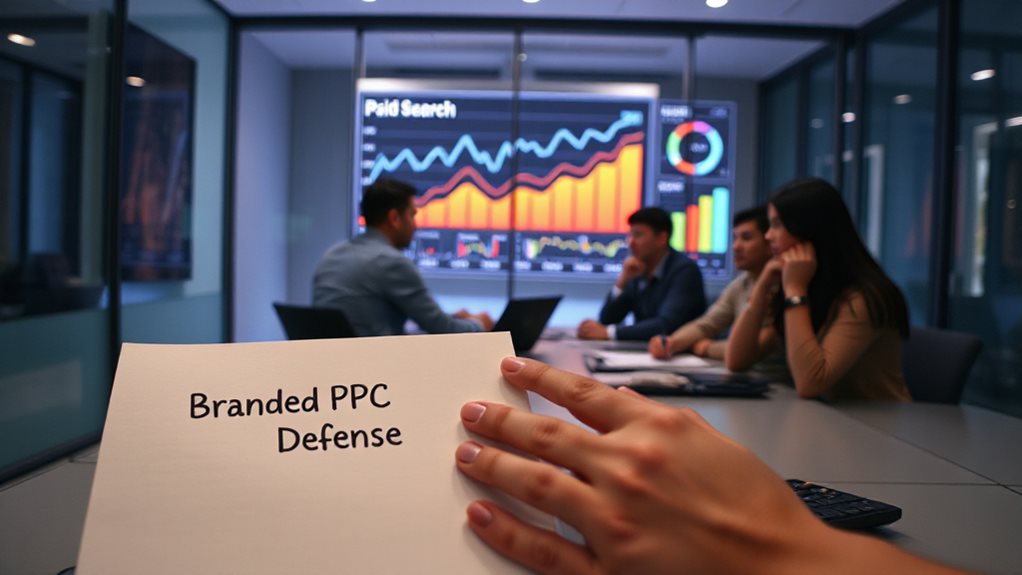
The conversion edge isn’t the only place paid search earns its keep. I’ve watched competitors siphon high-intent traffic by bidding on brand terms you’re not defending. You need aggressive exact-match bidding—never budget-limit these campaigns—and structured defense across four intent signals. In competitive categories, 40% of your brand auctions face competitor intrusion. That organic ranking you trust? It won’t stop comparison sites from capturing your ready-to-buy audience. Many WordPress sites that look fine on the surface still fail to convert that traffic because of hidden technical issues like slow load times and poor site structure that erode SEO effectiveness.
Why Organic Wins for B2B and High-Consideration Purchases
You’ve probably noticed how B2B buyers take their sweet time researching before they ever fill out a form, and that’s exactly where organic search earns its keep. I keep seeing companies burn through paid budgets chasing decision-makers who aren’t ready to buy, when a solid content strategy would’ve caught them three months earlier during their “just looking” phase.
The real payoff comes from building authority that compounds—unlike ads, which stop working the moment you pause them, your best articles keep converting prospects who’ve been reading your stuff for quarters.
Longer Sales Cycles
Where exactly does your buyer go when they’re six months from signing anything? Not your paid ad, I’ll tell you that. They’re researching quietly, building requirements, comparing options—long before you’ll ever see them.
I’ve watched $200K deals take 230+ days, with buyers completing 83% of their journey alone. Paid ads can’t follow that patience; they expire, irrelevant, while your organic content keeps answering questions at 2am when someone’s finally ready.
Trust Through Authority
That patience I mentioned? It builds something paid ads can’t buy: trust. I see it constantly—B2B buyers spend 2.6% more converting through organic, not because they’re cheap, but because you’ve earned authority. They researched, bookmarked, returned.
Your top organic position signals expertise; your paid ad signals budget. Both matter, yet only one persists when spending stops.
Higher Lifetime Value
Patience pays dividends you won’t find in a monthly ad report. I’ve watched B2B clients chase quick wins through paid search at 1.5% conversion, while their organic foundation sat neglected at 2.6%.
You’re building compound interest here—professional services hit 5%, industrial reaches 4.4%. High-consideration purchases demand trust you’ve earned, not rented.
Industry-by-Industry: Where SEO Beats Paid Search (And Where It Doesn’t)
Why does one industry treat SEO like a goldmine while another burns through PPC budgets with genuine enthusiasm? I’ve watched financial services, real estate, medical devices, and legal sectors convert organic traffic at 3–7x paid rates because trust drives these decisions. Higher education’s the exception—PPC wins there with 1.4% conversion rates and enrollment urgency. Match your strategy to buyer behavior, not trends.
The Churn Problem: Why Paid Search Customers Leave Faster
You’ll notice paid search customers often leave faster than organic ones, and I’ve seen this pattern repeat across dozens of campaigns—their lifetime value drops while acquisition costs climb, creating a profitability squeeze that surprises teams who focused only on conversion rates. The root cause is intent mismatch: someone clicking a “buy now” ad typically wants immediate gratification, not a long-term relationship, whereas organic visitors researched, compared, and chose you deliberately. I always warn clients that high churn in paid cohorts isn’t a retention problem to fix later; it’s baked into the acquisition channel itself, which means your unit economics need to account for faster exits from day one.
Lower Lifetime Value
How much is that shiny new paid search customer really worth if they’re gone in six months? I’ve watched this pattern repeat across dozens of WordPress sites.
Paid search brings faster conversions, but those customers churn at 5-7% monthly—double or triple your organic visitors. You pay acquisition costs repeatedly instead of building compound value.
It’s efficient for quick wins, expensive for sustainable growth.
Higher Acquisition Costs
Where does that paid search budget actually go when your new customers vanish before they’ve paid for themselves? You’re burning 5-25 times more on acquisition than retention demands, yet most businesses pour 80% of marketing spend into filling a leaky bucket. I’ve watched paid search campaigns look profitable on paper, then collapse once churn reality sets in.
Intent Mismatch Impact
That acquisition cost problem gets worse when you look at who actually sticks around. I’ve watched paid search visitors bounce harder than organic traffic time and again. You lure them with promises your landing page doesn’t quite deliver, and they notice.
The intent mismatch—clicking an ad expecting X, finding Y—kills trust instantly. They churn faster because they never really wanted *you*; they wanted what your ad promised.
The PPC Ceiling: Why Paid Budgets Can’t Scale Forever

Why do so many marketers assume that doubling their Google Ads budget will simply double their results? I’ve watched clients burn cash this way. Smart Bidding needs 10-20% daily increases, not shocks, or you’ll trigger chaotic relearning. Your CPC climbs, ROAS stalls, and suddenly you’re paying 20% more per customer for diminishing returns. The ceiling is real; respect it, or waste it.
SEO’s Compound Effect: How Organic Reduces Acquisition Costs Over Time
How does a single blog post you published eighteen months ago keep pulling in qualified leads while your last Google Ads campaign stopped converting the moment you paused it?
I’ve watched this pattern repeat across dozens of sites: organic traffic compounds like interest, each piece building on the last.
Your domain rating climbs, your keyword footprint expands, and suddenly you’re capturing 56,000 monthly sessions from work you did two years ago—work that keeps appreciating without another invoice.
Paid channels don’t do that. They can’t.
Running Both Channels: When Integration Beats Channel Preference

Perhaps you’ve noticed the same tension I keep running into: teams treating SEO and paid ads like rival departments, each defending their budget and metrics while the real opportunity slips through the gap between them. I’ve watched businesses waste months waiting for organic traffic that never arrives, and others burn cash on paid ads without building any lasting asset. The fix isn’t picking sides—it’s integration. You use PPC for immediate traffic and keyword validation while your SEO foundation compounds in the background. I’ve seen this hybrid approach cut acquisition costs by 30% once organic matures, because you’re not starting from zero each month. The channels aren’t rivals; they’re teammates with different strengths, and smart allocation beats channel loyalty every time.
The 3-Question Test: How to Prioritize SEO vs. PPC Budget?
Where do you actually start when your budget’s finite and both channels are screaming for attention? I use three questions. First, what’s your timeline? Need traffic this week—PPC wins. Building something that lasts? SEO’s your foundation.
Second, what’s your budget reality? Under $1,000 monthly, you can’t afford PPC’s hunger; invest in content that compounds.
Third, what does the competitive landscape actually look like? If rivals dominate organic results, you’ll pay the toll either way—sometimes literally. Answer honestly, and your split becomes obvious.
And Finally
You don’t need to pick a side. I’ve watched businesses burn cash chasing quick wins, and others wait too long for organic traffic that never arrives. The trick is matching the channel to your timeline, margins, and customer journey. Test ruthlessly, measure properly, and let data—not agency pitch decks—guide your split. Most companies I work with eventually run both, but they start with the one that pays for the other.


