Why You’re Not Ranking in Google Maps (Map Pack Guide)
You’re not ranking in Google Maps because your profile’s likely missing core signals like a precise category—using “Consultant” instead of “SEO Specialist” won’t cut it—or your NAP’s inconsistent across directories, which confuses Google. Incomplete hours, missing service areas, or a sparse description don’t help. I’ve seen great businesses vanish from the map over a wrong pin or zero reviews. Weak website links and stale posts tell Google you’re inactive. Fix the basics, and you’ll start seeing changes. There’s more where that came from.
TLDR
- Incorrect or overly generic business categories reduce relevance and prevent visibility in local map searches.
- Inconsistent NAP information across directories confuses Google and can trigger duplicate listing issues.
- Incomplete profile sections, like missing hours or photos, weaken trust and lower local search rankings.
- Lack of user engagement signals—such as clicks, calls, and direction requests—tells Google the listing is less useful.
- Poor website quality, missing location pages, and weak backlinks undermine local ranking and map pack eligibility.
Incorrect or Missing Primary Business Category

Let’s cut through the noise—your primary business category isn’t just another field to fill out; it’s the foundation of your entire Google Maps presence.
I’ve seen businesses vanish from local search because they picked “Consultant” instead of “SEO Specialist.” Google uses this choice to decide what searches you’re relevant for—get it wrong, and you’re invisible to the right customers. One of the most significant ranking factors for Google Maps visibility is your Google Business Profile category, which directly influences whether your practice appears in the Local 3-Pack or gets overlooked entirely. You should also ensure your category aligns with your accurate business information to help Google match you to relevant local queries.
Inaccurate Business Location or Service Area Setup
You nailed your primary category—great.
Now, let’s talk location. I’ve seen businesses vanish from maps just because they skipped street numbers or pinned inaccurately. Use Google’s Geocoding API for precision. If you’re service-based, confirm you’ve selected “no” to a physical location—otherwise, Google’s confused, and so are customers. And yes, that postcard verification still takes two weeks. Plan ahead. A complete and accurate profile increases the likelihood of appearing in local searches, so ensure all details are filled out, as businesses with complete profiles are 70% more likely to attract visits from potential customers. Also make sure your listings and citations are consistent across the web to improve local search visibility.
Incomplete Google Business Profile Information

While Google doesn’t slap an official penalty label on incomplete profiles, I’ve watched businesses lose visibility simply because they left basic fields blank—like showing up to a meeting in pajamas and wondering why no one takes you seriously.
Fill every section: hours, description, photos, services. Missing details confuse algorithms and frustrate customers. Complete profiles earn trust, enhance relevance, and rank higher—period. You should also make sure your listing follows Google’s policies and complete verification steps to avoid suspensions and restore visibility if needed, see verification process.
Lack of Regular Posts and Profile Updates
A complete profile gets you in the game, but if you treat your Google Business Profile like a digital business card you stamp once and forget, you’re leaving visibility on the table.
I’ve seen businesses stall for months, wondering why they don’t rank—only to realise they haven’t posted since 2021. Regular updates signal activity, feed the algorithm, and keep your audience engaged. Skip them, and Google treats you like a ghost. Consistent posts and profile optimization also help service-area businesses build local relevance and improve discovery in nearby searches.
Poor Review Quantity, Quality, or Response Rate

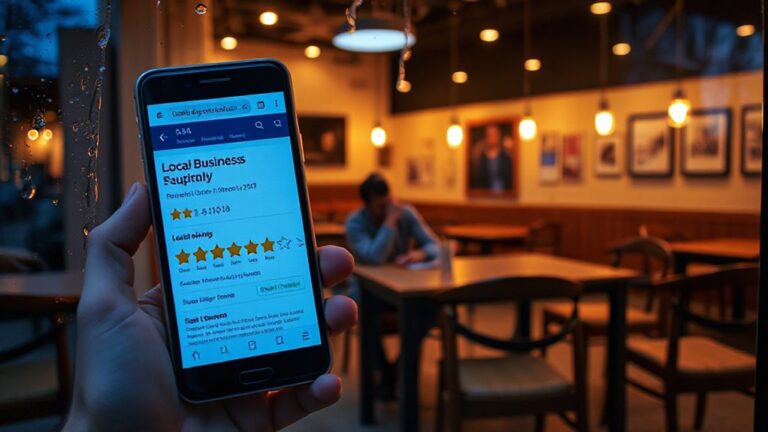
Often, it’s not a broken algorithm or stiff competition that’s keeping you off the first page of Google Maps—it’s the quiet erosion of trust caused by poor review habits.
I’ve seen businesses stall at nine reviews, missing that small but real 10-review lift.
Google weighs quantity, quality, and your response rate as prominence signals.
Skip replies or let negativity sit, and you’re silently conceding ground.
Missing or Misused Keywords in Business Title and Description
One in three local businesses I audit is leaving ranking potential on the table—right in their Google Business Profile title and description—by either omitting critical keywords or misusing them in ways that trigger algorithmic side-eye.
You must use your real business name—no stuffing “Towing, Wreck Recovery, 24/7 Service” into the title. Google penalizes that.
In your description, front-load location, core services, and unique value—naturally. I’ve seen profiles gain visibility just by cleaning up keyword spam and focusing on clarity.
It’s not about density; it’s about relevance.
Weak Website Signals and Missing Location-Specific Pages

Don’t assume your Google Business Profile stands alone—your website is its backbone, and if the signals are weak, your Maps ranking will be too.
I’ve seen sites rank poorly simply because they skip HTTPS, ignore E-A-T, or fail to mirror GBP details.
Missing location pages? That’s like having a store but no address on the door.
Add structured data, fix the basics, and watch relevance grow.
Inconsistent NAP Across Directories and Citations
You’ve probably cleaned up your website’s HTTPS, structured data, and location pages—good.
But if your NAP’s inconsistent across directories, Google’s still unsure who you are. I’ve seen identical businesses treated as duplicates just because “St.” became “Street.” Fix it: audit top 50 citations, match every detail exactly, and include your website. Trust me, uniformity beats cleverness here.
Low User Engagement and Missed Behavioral Signals

You’re losing ground in rankings because low click-through rates, missing direction requests, and an inactive profile tell Google your business isn’t relevant.
I’ve seen plenty of optimised listings tank in visibility simply because no one’s engaging with them—Google notices when people skip your pin or close it fast.
If users aren’t clicking, locating, or interacting, the algorithm assumes you’re not worth promoting, plain and simple.
Low Click-Through Rates
More often than not, low click-through rates aren’t just a symptom of poor visibility—they’re a root cause of it.
I’ve seen businesses rank in the top three of Local Pack and still get bypassed because their name, photo, or review count looks off.
You’re competing for attention, not just placement.
A weak headline, outdated info, or sparse reviews kills clicks.
And when Google sees low CTR, it assumes you’re irrelevant—so you drop.
Missing Direction Requests
Google ignores your listing when users ignore it—simple as that. If they’re not requesting guidance, Google sees low engagement.
I’ve audited hundreds of listings; missing direction signals consistently hurt rankings. Users expect seamless guidance, and when they don’t act, AI devalues your relevance.
Optimize with accurate info, real photos, and clear cues—make taking directions the obvious next step, because it is.
Inactive Profile Signals
Often, the quietest signals scream the loudest in local SEO—and when your profile sits unseen, unclicked, and untouched, Google takes note.
Low views, calls, clicks, and messages tell Google your listing isn’t useful. I’ve seen clients overlook this for months, wondering why rankings stall.
You’re not invisible by accident; you’re inactive by default. Start tracking engagement—it’s not just about being found, but being chosen.
Insufficient Backlinks and Offline Prominence
You’ve probably poured time into your Google Business Profile, only to find your competition still showing up above you—despite what feels like all the right moves. You’re not alone.
Backlinks make up 24% of local ranking factors, yet most overlook niche-specific, high-authority links. Pair those with consistent reviews—especially with photos—and you build real offline prominence.
Skip the spammy directories; focus on credibility, not clutter.
And Finally
I’ve seen it a hundred times: you fix the basics, and suddenly Google starts paying attention. You’re not ranking because something’s off in your profile, not because of magic algorithms. Pick one issue from this list—probably the category or NAP—and fix it today. The map pack rewards accuracy, consistency, and real-world signals, not tricks. Do the work, stay active, and yeah, maybe stop overthinking it.