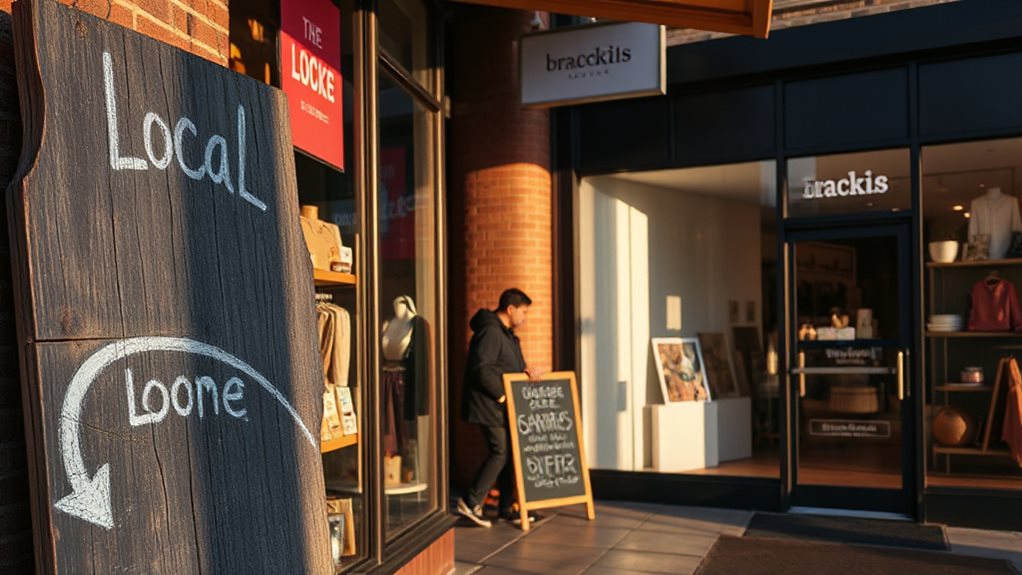
How to Compete With Big Brands Locally
You beat big brands by exploiting what their scale makes impossible. Local retailers keep 53% of revenue circulating in the community versus 14% for chains—money your neighbors actually see again. You pivot faster without quarterly reviews, stock specialty items big boxes ignore, and create tactile experiences Amazon cannot ship. I have watched small shops convert first-timers into regulars through personalized service and genuine follow-up, not points programs. The strategies below show exactly how to turn these structural advantages into measurable growth.
TLDR
- Keep 52.9% of revenue circulating locally versus 13.6% for chains, turning purchases into neighbor livelihoods.
- Deploy specialty inventory like left-hand tools and hyper-local goods that mass retailers ignore completely.
- Host workshops, local art collaborations, and hands-on events Amazon cannot ship to deepen community bonds.
- Launch personalized loyalty programs and follow-up systems that convert 60% more first-time visitors into regulars.
- Reallocate fulfillment and marketing within days using small-team agility without corporate approval delays.
The 52% Revenue Advantage Local Stores Have Over Chains

Most small business owners I’ve worked with don’t realise they’re sitting on a revenue advantage that chain competitors can’t replicate, even with their billion-dollar marketing budgets. You’re recirculating 52.9% of every purchase locally—nearly four times what chains manage at 13.6%. That’s not marketing spin; it’s documented economic impact. When you explain this to customers, you’re offering something Amazon literally cannot: genuine community investment. Local retailers also keep 28.2% of revenue right in the community through profit and wages—money that directly supports your neighbors’ livelihoods rather than distant shareholders. Hosting choices can also shape how quickly customers find your site and how search engines crawl it, which affects local visibility and conversions; learn about hosting speed to protect that advantage.
Why Being Small Lets You Pivot Faster Than Corporate Retail
That 52% revenue recirculation advantage is real money staying in your community, but here’s something else you’re sitting on that chains can’t buy with all their capital: the ability to actually move when opportunity knocks. Small organizations decreased agility by only 0.6 points while micro-businesses maintained consistent levels. You’re not burdened by quarterly review cycles or cross-departmental sign-offs. I’ve watched local retailers reallocate fulfillment resources within days while competitors waited for regional approval. Your 16-150 person team can deploy mission-based specialists—business, tech, data—driving 30% customer satisfaction increases in under six months. Chains talk about being agile; you’re built for it. This quick prioritization of accounts and resources lets you seize opportunities while larger competitors remain stuck in bureaucratic approval loops. Additionally, using AI for research and planning can help you move faster without publishing AI-generated content.
Steal Shoppers From Big-Box Stores With These 3 Tactics

Where exactly do you think shoppers go when they’re tired of wandering cavernous aisles for something that doesn’t exist? They come to you—if you’ve built something worth finding.
I’ve watched small retailers win by narrowing their selection to specialty items that big boxes ignore, like left-hand tools or hyper-local goods. You’re not trying to serve everyone; you’re serving someone memorably. Listen to neighborhood preferences, stock organic pet food or reusable bags when that’s what locals value, and curate distinctive, locally sourced inventory that reflects your identity. The mistake I see repeatedly? Copying big-box breadth instead of doubling down on what makes you irreplaceable.
Then create experiences they can’t replicate. Host small events, collaborate with local artists, or offer workshops—I’ve tracked these through POS systems and watched them drive measurable sales. Partner with a café for in-store coffee, decorate with local photography, and participate in shop local campaigns. These touches build emotional connections that transactions alone never will.
Finally, deliver service that remembers. Use CRM tools like HubSpot for personalized follow-ups, empower your team to solve problems creatively, and negotiate supplier perks like early access or exclusive lines. Quality inventory matters too—when I’ve helped shops emphasize durability over discount pricing, customers notice and return. Be careful, though: bloated WordPress themes can slow your site and hurt discoverability, so optimize your site for speed with lightweight themes and good practices.
Convert First-Time Visitors Into Weekly Regulars
How often have you watched someone walk through your door, make a single purchase, and then vanish into the neighbourhood like they were never there? I’ve seen it countless times, and it’s maddening. You can’t outspend big brands on acquisition, so you must out-retain them. Start with service excellence—96% of consumers cite it as essential for loyalty, and Americans pay 17% more for it. Layer in a reward program; they increase revenue 15–25% annually and 75% of customers prefer businesses offering them. Personalize every touchpoint—personalized experiences make customers 60% more likely to return. Finally, nail your follow-up; poor follow-up kills 41% of accounts, while a simple second-week onboarding touchpoint lifts six-month retention 9%. Do this, and you’ll elevate strangers into regulars who wouldn’t dream of shopping elsewhere. Consider auditing and improving or removing low-value web pages to boost overall site authority and help more locals find your business through search via content cleanup.
Create In-Store Experiences Amazon Can’t Ship

The one thing Amazon can’t stuff into a cardboard box is the reason 76% of consumers say physical experiences deepen their connection to a brand—so you’re going to build your store around what happens when people actually walk through your doors.
Host local business classes, partner with non-profits, or create seasonal impulse-buy hubs.
Let customers touch, feel, and disconnect from screens—because 81% of Gen Z craves exactly that.
And Finally
You’ve got advantages chains can’t replicate—speed, relationships, and real community presence. Use them. I’ve watched too many local owners try to out-Amazon Amazon instead of leaning into what actually works: knowing your customers by name, adapting overnight, and creating reasons to visit that no algorithm can match. The tools are simple. The discipline’s harder. Start with one tactic this week, measure honestly, and build from there. You’ve already got the edge; use it.