AI-Powered Content Briefs: Faster, Smarter Planning
AI-powered content briefs reclaim about 73% of your structural busywork, turning hours of outlining into roughly 30 minutes of focused refinement. You feed the machine your title, audience, and three competitor links, then interpret the intent behind the keywords it surfaces—because speed without judgment just creates elegant garbage. Platforms like Jasper or Copy.ai generate workable frameworks instantly, though you’ll still need to verify sources, audit subheading relevance, and train the tool on your brand voice if you want consistency at scale. The real payoff isn’t the time saved, but how that time gets redirected toward strategic decisions that actually move rankings and conversions forward.
TLDR
- AI automates 73% of repetitive brief structure, reclaiming hours for strategic work.
- Ten-minute inputs yield complete outlines using competitor data and clear audience targets.
- Live SERP scraping and intent mapping ensure briefs match actual search behavior.
- Structured briefs reduce revision cycles and accelerate draft-ready content production.
- Style guide training maintains brand voice consistency across hundreds of briefs.
Why Automate Your Content Briefs?

Why spend your morning wrestling with blank documents when you could be reviewing actual drafts? I’ve watched marketers burn 2.5 hours daily on repetitive groundwork—outlining, researching, formatting—when AI handles 73% of that structure automatically. You’re not replacing judgment; you’re reclaiming time for strategy. The 40% productivity lift isn’t theoretical. It’s what happens when you stop reinventing the wheel on every brief. Platforms like Jasper and Copy.ai generate drafts and outlines almost instantly, reducing hours to about 30 minutes. Assessing whether SEO spend drives real business value helps prioritize where AI can free up strategic resources.
Your First AI Content Brief: A 10-Minute Walkthrough
You don’t need a certification or a weekend course to start using AI for briefs. I’ve seen marketers overcomplicate this for years. Pick one piece you’re planning, open your AI tool, and feed it your title, audience, and top three competitor links. In ten minutes, you’ll have a workable structure. It’s not magic—it’s just faster research with fewer coffee breaks. Structured briefs serve as roadmaps that eliminate ambiguity and reduce revision cycles, ensuring your entire team understands goals before work begins. Choose plugins and tools that prioritize data security when integrating AI into your workflow.
How AI Turns Search Data Into Brief Outlines

You start with raw search data—SERP positions, keyword clusters, competitor headings—and AI rapidly transform this into structured brief elements, though I’ve found the real value isn’t speed alone but how well the tool interprets intent behind those queries.
Most platforms now map informational versus commercial keywords automatically, which saves you from the classic mistake of targeting “best CRM software” with a purely educational article that’ll never convert.
The outline generation happens in seconds, but you’ll still need to apply your judgement on which subheadings actually serve your reader’s next step, because no algorithm fully grasps your specific buyer’s context yet.
AI-driven workflows also enable topic targeting and iterative optimization that sustain traffic and engagement over time.
Data Extraction Process
The data extraction process is where most content briefs either earn their keep or fall apart completely.
I’ve watched too many tools pull stale rankings or guess at keywords, then wonder why the content misses.
You need live SERP data, full competitor page scraping—not snippets—and verified sources with working URLs.
Skip any step, and you’re building on sand.
Intent Mapping Techniques
Once you’ve got clean, live data sitting in front of you, the real work begins: figuring out what people actually want when they type something into a search bar. I start by tagging every keyword with intent—informational, commercial, transactional—using AI to catch secondary signals humans miss. Then I map each intent to format: guides for learning, comparisons for buying, FAQs for quick answers.
You’ll spot gaps fast when you grid this out—too much “what is” content, not enough “buy now” pages. I’ve watched brands pour resources into blog posts that never convert because nobody checked whether searchers actually wanted to purchase, or just window-shop.
Outline Generation Speed
Why spend three hours staring at a blank page when AI can hand you a working outline before your coffee goes cold?
I’ve watched tools morph scattered notes into structured briefs in seconds, not hours.
You upload research, and algorithms extract themes, build logical flow, and deliver SEO-ready frameworks instantly.
Batch processing handles multiple projects simultaneously.
That’s practical speed without the hype.
5 Elements Every AI-Generated Brief Needs
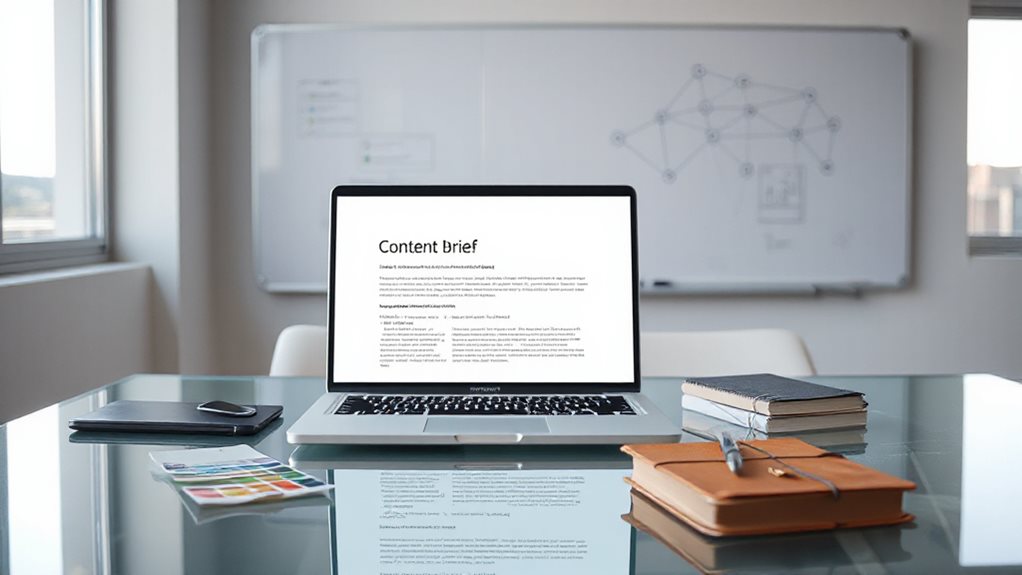
How often have you opened an AI-generated content brief only to find it’s basically a keyword list dressed up in corporate jargon? I’ve learned the hard way that you need demographic precision, clear objectives, and proper heading structures—not just search volume. Add pain points, funnel positioning, and realistic word counts. Skip the fluff about “synergy.” Your writers deserve actual guidance. Also include local-first elements like Google Maps optimization to help content perform for nearby searchers.
Cut Brief Research From Hours to Minutes
You’ve got the structure sorted—now let’s talk about clawing back those hours you’re currently burning on research.
Only 10% of teams still do deep research before prompting AI, and frankly, that’s the smart move. I feed AI my target keyword, competitor gaps, and audience pain points—then let it surface patterns I’d spend two days hunting. You’ll shave 58% off your timeline, and the brief doesn’t suffer; it sharpens.
The trick? Don’t trust AI’s first sources. I always cross-check statistics and authority claims, because nothing tanks credibility faster than a phantom study.
Keep Brand Voice Consistent Across 100+ Briefs

A hundred briefs in, and you’ll notice something: your brand voice starts drifting like a tired GPS recalculating. I’ve watched teams lose 30% engagement because their messaging wobbled across campaigns. You fix this by training your AI on style guides, tone parameters, and exemplar content upfront. Build dynamic templates with fixed brand elements, then let variables adapt to audiences. Run regular audits using Voice Accuracy Scores. That 80% consistency, 20% personalization split keeps recognition sharp without sounding robotic.
Where to Edit AI Output Before Hitting Publish
Where exactly does AI-generated content need your attention before it goes live? I’ve found three critical checkpoints: Grammarly or Hemingway for style and clarity, Winston AI for originality scoring, and manual fact-checking for accuracy.
Skip any of these, and you’ll likely publish something that sounds robotic, triggers detection tools, or contains embarrassing errors. Trust me—I’ve learned this the hard way.
And Finally
You’ve seen how AI content briefs cut research time without cutting corners. I’ve used this workflow across hundreds of projects, and the key is treating AI as a starting point, not a finish line. Review the structure, check the search intent yourself, and layer in your brand voice. Do that, and you’ll publish faster without the regret.