Local SEO for Restaurants: Getting Found by Hungry Locals
To get noticed by hungry locals, start by claiming and verifying your Google Business Profile, then complete every section with accurate info and high-quality photos—consistency is key. Build a local keyword plan using specific terms like “best pizza in Brooklyn,” naturally embedding them into your website and GBP. Respond promptly to reviews and update listings across platforms. Creating location-aware content about local dishes and events enhances relevance. Implement schema markup and track results; the subtleties make a difference—keep going to learn the finer points.
TLDR
- Claim and optimize your Google Business Profile with accurate info, high-quality photos, and regular updates to boost local visibility.
- Incorporate local keywords naturally into website content and GBP to attract nearby customers searching for your cuisine.
- Respond promptly to reviews, using location-specific keywords to enhance engagement and search ranking.
- Create location-specific content highlighting local events, landmarks, and regional specialties to build community recognition.
- Use schema markup and track SEO metrics regularly to improve search visibility and adapt strategies effectively.
Start by Claiming and Optimizing Your Google Business Profile
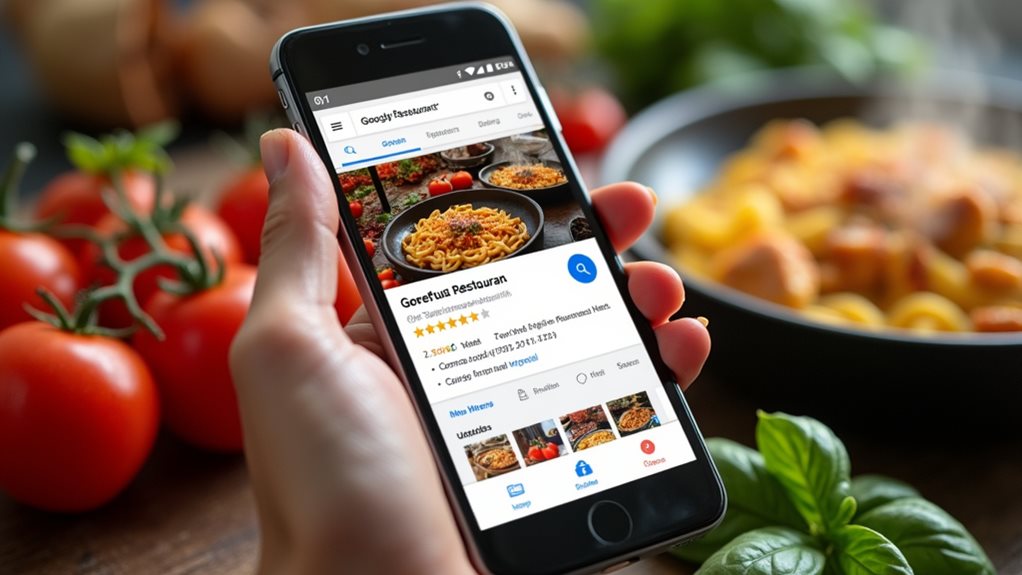
Starting with your Google Business Profile (GBP) is the foundation of local SEO for restaurants—skip it, and other efforts often flounder. You must claim and verify your GBP to control your restaurant online presence. Complete all profile sections with accurate business information, upload high-quality photos, and keep GBP updates current. Keeping your GBP accurate and active is essential for maintaining visibility and attracting hungry locals. Consistent NAP details enhance trust and rankings.
Build a Local Keyword Strategy That Gets Noticed
Crafting a local keyword strategy that actually gets noticed isn’t about sprinkling random terms across your website and hoping for the best. Instead, focus on local restaurant keywords, high-volume local search terms, and restaurant-specific long-tail keywords like “best pizza in Brooklyn.” Use tools like Google Keyword Planner, regularly update your list, and naturally incorporate these into your website and Google Business Profile for maximum visibility. Additionally, leveraging AI tools can help identify safe local SEO practices that boost your rankings without risking penalties or spam filters. It’s also important to diagnose why Google isn’t indexing your site and implement fixes to ensure your content gets noticed by your target audience.
Manage Listings and Respond to Reviews to Boost Rankings
Responding promptly and professionally to reviews—within 72 hours—signals activity and helps improve your local search rankings, so don’t let reviews linger unanswered.
Thank positive feedback and address negative comments with genuine care, as this builds trust and encourages more engagement.
Keep your listings consistent across platforms and use tools like QR codes or automated follow-ups to make review management easier and more reliable.
Understanding how SEO results develop over time can help you stay patient and strategic while waiting for measurable improvements.
Additionally, be mindful that routine WordPress updates can sometimes cause SEO disruptions if not handled carefully, so backing up your site before updates ensures you can revert changes if needed.
Respond Promptly and Professionally
Engaging promptly and professionally with your reviews sends a clear signal to Google that your restaurant is active and attentive, which can meaningfully elevate your local search rankings.
To do this effectively:
- Respond promptly to both positive and negative reviews.
- Use review responses to include location-specific keywords.
- Maintain review professionalism, thanking praise and addressing concerns with tact.
This review management enhances your review reputation and encourages more feedback, improving visibility in Google reviews and the Local 3-Pack.
Maintain Consistent Listings
Ensuring your business information remains consistent across all online platforms is one of the most straightforward yet often overlooked steps in local SEO.
| Platform | NAP Details | Status |
|---|---|---|
| Google My Business | Correct address, phone | Verified |
| Yelp | Same name, address | Updated |
| TripAdvisor | Accurate info | Verified |
Consistent listings and prompt review responses, especially with location keywords, enhance your local search rankings and online reputation.
Create Location-Specific Content That Converts
To truly connect locally, your content should highlight current food trends and community events, giving potential diners a reason to choose you over competitors. Incorporating details like local specials or neighborhood landmarks helps Google connect your restaurant with the right audience. Additionally, optimizing your site’s Page Authority can improve individual page rankings, making it easier for hungry locals to discover your offerings. Focusing on building a memorable brand that resonates within your community can also boost your Brand Search Volume, encouraging more direct searches from loyal customers.
Highlight Local Food Trends
Highlighting local food trends is one of the most direct ways to make your restaurant’s online presence more relevant and attractive to nearby diners. Focus on:
- Showcasing regional specialties and seasonal dishes through blog posts or menus.
- Using trending keywords like “birria tacos” or “seasonal menu items” in your content.
- Promoting local food fads via social media, food festivals, and collaborations.
These tactics enhance visibility and engagement.
Share Community Events
Ever wondered how sharing community events can give your restaurant a tangible increase in local search results? By highlighting local events, sponsorships, and community involvement on your Google Business Profile and website, you increase local engagement and visibility.
This creates beneficial local citations and user-generated content, strengthening your SEO, improving neighborhood searches, and attracting more nearby diners—without relying on magic, just smart local SEO.
Implement Technical SEO Elements Like Schema Markup
Implementing schema markup correctly is a practical step that can substantially improve your restaurant’s visibility in search results.
- Use Restaurant, LocalBusiness, and Menu schemas to clarify details for search engines.
- Test your structured data with Google’s Rich Results Test to avoid errors.
- Implement location-specific schema for multiple sites to enhance local relevance and elevate search engine visibility.
Track Your Results and Continuously Improve Your Local SEO

To improve your local SEO over time, you need to track your results with precision and consistency—think of it as a health checkup for your online presence.
Regularly review search rankings, review metrics, and website traffic using tools like Google Search Console and local ranking trackers.
Analyze review trends, update content, and set clear performance goals for ongoing optimization and better visibility signals.
And Finally
Getting local SEO right isn’t complicated, but it does require attention to detail and consistency. Focus on claiming your profile, using targeted keywords, managing reviews, and creating content customized to your area. Technical elements like schema markup are often overlooked but can give you a subtle edge. Remember, SEO is a continuous process—monitor your progress and adapt. Ignore the myths; stick to proven tactics, and you’ll be more visible to hungry locals without wasting time chasing shiny objects.