SEO Chrome Extensions Worth Installing in 2026
For 2026, shoehorn in a handful of reliable, free SEO extensions like Ubersuggest, MozBar, and SEOquake for essential metrics and quick site audits; they’re solid starting points. Combine these with Keywords Surfer for targeted research and Detailed SEO for technical understanding, but stay wary of overloading your browser—less is often more. Paid tools can offer precision, but carefully curate your lineup to avoid slowing down workflows. Keep your setup lean, effective, and be prepared for surprises; there’s always more beneath the surface.
TLDR
- Focus on extensions like Ubersuggest, MozBar, and SEOquake for comprehensive keyword, technical, and backlink analysis.
- Choose tools that integrate smoothly into your workflow, prioritizing data accuracy and user-friendly interfaces.
- Limit active extensions to 5-7 to maintain browser performance and streamline SEO tasks effectively.
- Use free tools for basic insights; consider paid options for advanced analytics and detailed SEO management.
- Regularly audit and disable unused extensions to optimize efficiency and ensure reliable SEO data.
What Are the Best Free SEO Chrome Extensions to Use in 2026?

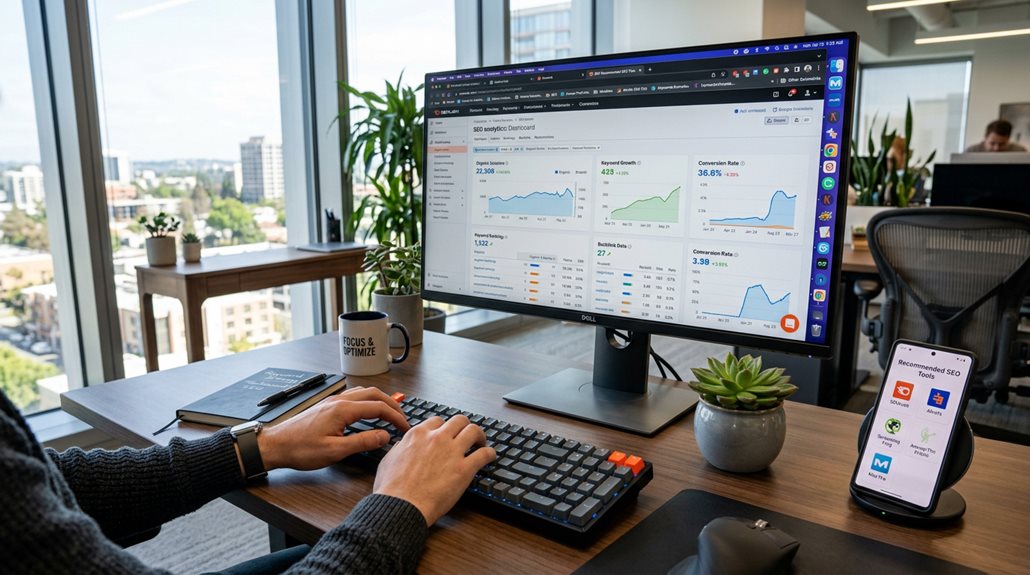
If you’re serious about SEO in 2026, relying solely on paid tools isn’t enough—you need reliable, free Chrome extensions that deliver actionable understanding without draining your budget or your patience. Tools like Ubersuggest, MozBar, SEOquake, Keywords Surfer, and the Detailed SEO Extension provide essential SEO metrics, keyword research tools, link analysis, and website analysis. They streamline technical SEO, backlink profiles, and keyword volume perspectives efficiently. Incorporating safe automation strategies can help you leverage these tools effectively for local SEO tasks like citations and listings without risking penalties or spam filters. Understanding SEO or Google Ads advantages and when each approach delivers the best ROI can further optimize your efforts in using these extensions.
How Do You Choose the Right SEO Extensions for Your Goals?
Choosing the right SEO extensions begins with a clear understanding of your specific goals—whether that’s keyword research, technical audits, or backlink analysis—and selecting tools that support those tasks. Focus on data accuracy, extension compatibility, and workflow integration to avoid browser slowdown. Limit your tools to 5-7 for efficiency, testing to verify they meet your needs. Being aware of potential local search traffic pitfalls can help you prioritize high-value opportunities over just volume. Additionally, assessing the efficiency of SEO extensions ensures they seamlessly fit into your existing workflow without causing unnecessary delays.
What Features Matter Most When Selecting SEO Chrome Extensions?
When choosing SEO Chrome extensions, it’s all about identifying features that streamline your workflow and guarantee dependable insights. Emphasize precise on-page analysis, data transparency, and metrics overlay directly on search results. Acknowledge that ranking factors such as intent mismatch, competition, and internal linking significantly influence an extension’s effectiveness. Compatibility with your existing tools, a user-friendly interface, and minimal browser slowdown are vital for maintaining performance and making swift, informed decisions without compromising data integrity. Additionally, understanding how well an extension integrates with structured data and technical SEO best practices can enhance its overall value.
Paid vs Free SEO Extensions: Which Offers the Best Value?

While free SEO extensions like Keywords Surfer and Detailed SEO can be surprisingly helpful for quick checks and everyday tasks, they often come with limitations that hinder holistic analysis. Here is a quick comparison:
| Feature | Free Tools | Paid Extensions | Best For |
|---|---|---|---|
| Data Accuracy | Moderate | High | In-depth backlink analysis |
| SEO Analytics | Basic | Advanced | Competitive strategy |
| Cost | Free | Subscription-based | Long-term investment |
| Focus | Quick perspectives | Full-scale SEO management | |
| Use Case | Small sites, casual use | Agencies, serious SEO efforts |
Additionally, understanding the structural issues that lead to the need for a full rebuild can save time and resources in the long run.
How Can You Use Multiple SEO Extensions Without Slowing Down Your Browser?
Managing multiple SEO extensions without bogging down your browser requires a strategic approach, because overloading Chrome with too many active plugins can slow down your workflow faster than you’d expect.
Limit active extensions to 5-7, regularly disable unused tools, and group related extensions into profiles. Prioritize lightweight SEO tools, and periodically audit their impact to optimize browser performance and workflow efficiency.
And Finally
Choosing the right SEO Chrome extensions in 2026 isn’t about chasing every shiny tool but focusing on those that align with your specific goals and workflow. Use a combination of free and paid extensions wisely, prioritizing features that save time and improve accuracy. Remember, overloading your browser can do more harm than good—so pick your tools carefully. With experience, you’ll find a practical setup that keeps your SEO efforts sharp without slowing down your day.