How to Increase Your AdSense RPM
To increase your AdSense RPM, start by fixing site speed issues and broken links, as slow sites kill ad impressions and user engagement. Focus on optimizing ad placement—position ads above the fold and within content for maximum visibility—using larger ad formats and responsive units. Maximize demand through header bidding, and implement ad refresh strategies to elevate impressions without extra traffic. Always monitor your metrics and adjust your approach—because in ad monetization, moving targets demand constant vigilance. Keep going, and you’ll uncover more actionable tactics ahead.
TLDR
- Optimize ad placement in high-visibility areas and within content to boost user engagement and impression quality.
- Use responsive ad formats and larger sizes to improve ad visibility and click-through rates.
- Enhance website speed and fix technical issues like broken links for better user experience and ad performance.
- Target high-value audiences with relevant content and keywords to increase CPC and overall RPM.
- Implement header bidding and diversify demand sources to maximize ad demand and revenue potential.
Understand the Main Factors That Influence Your AdSense RPM

Understanding what drives your AdSense RPM is essential if you want to enhance it effectively. You should focus on ad viewability, CTR, and CPC, which directly influence revenue. Improving traffic quality, strategic ad placement, and user engagement increase ad impressions and relevance. Additionally, demand factors like seasonal trends and niche competitiveness shape CPC, impacting your overall RPM—so stay vigilant and avoid common misconceptions. Monitoring SEO trends and business metrics can also help you identify shifts in audience behavior and market conditions that influence your earnings. Being aware of traffic quality and relevance can help you target more valuable audiences and boost your revenue potential.
Fix Website Speed and Technical Issues to Boost Revenue
Fixing mobile performance issues and resolving broken links are often overlooked but essential steps in speeding up your site and increasing ad impressions. Slow mobile pages frustrate users and lead to lower engagement, while broken links waste valuable ad slots and harm your credibility. Ensuring your website complies with Google Business Profile suspension guidelines can also prevent disruptions and maintain your revenue stream. Additionally, choosing a reliable Hosting provider known for fast load times can significantly improve your site’s speed and user experience.
Enhance Mobile Performance
A fast, responsive mobile site isn’t just a nice-to-have anymore—it’s essential for maximizing your AdSense RPM.
Improving mobile site speed through page speed optimization, fixing rendering issues, and ensuring a responsive design enhances ad viewability and reduces bounce rates.
- Optimize images and utilize caching
- Address mobile rendering issues
- Minimize code for faster load times
- Test regularly with tools like Google PageSpeed Insights
Resolve Broken Links
Have you ever clicked a link on your site only to find it leads nowhere? Broken links hurt your website’s crawlability and user experience, lowering ad impressions and RPM.
Regular website audits identify dead URLs, preventing bounce rate spikes.
Fixing technical issues like slow load times also *enhances* site speed, improving ad viewability and overall website health—key for maximizing revenue.
Optimize Ad Placement and Layout for Maximum Viewability
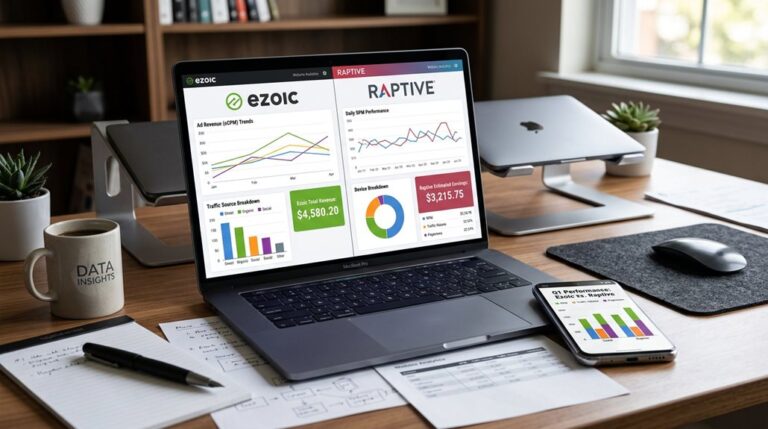
Strategic ad placement can considerably enhance your AdSense RPM, but it’s often ignored in favor of flashy formats or keyword tricks. Use heatmaps and analytics to find high-traffic areas, place ads above the fold near headlines or images, and experiment with sizes like 300×250 or 728×90. Incorporating ad viewability optimization into your strategy ensures that your ads are seen without compromising user experience. Seamlessly integrating ads into your layout amplifies viewability, impressions, and user engagement without disrupting your content flow. Additionally, understanding the entry bar of ad platforms like Ezoic and Raptive can help you choose the best monetization strategy as your site grows.
Choose Effective Ad Formats and Sizes for Better Performance
Choosing the right ad formats and sizes can make a notable difference in your AdSense revenue, especially when you’re already optimizing placement and layout.
Responsive ad units and larger ad sizes like 336×280 or 300×600 enhance visibility and engagement, improving ad performance.
Regular ad testing helps identify what works best for your audience, maximizing ad revenue with smarter ad formats and sizes.
Additionally, understanding best caching plugins can help reduce page load times, ensuring your ads display quickly and improving overall user experience.
Use Header Bidding to Maximize Demand and CPM

Implementing header bidding allows you to open up your inventory to multiple demand sources simultaneously, which naturally increases competition and pushes CPM higher.
It helps you maximize ad revenue potential because real-time auctions guarantee you’re getting the best possible price for each impression.
Just be aware that without proper setup, you might end up with a confusing demand environment—so, keep your integrations streamlined and your data transparent.
Increase Competition Among Buyers
Have you ever wondered why your ad impressions sometimes fetch lower CPMs than they should? Increasing competition through header bidding leads to a transparent, real-time bidding process where multiple ad exchanges and demand sources compete directly for ad auctions.
This bid competition attracts premium advertisers, enhances ad demand, and drives up CPM rates—often by 10-30%.
Maximize Ad Revenue Potential
Maximizing your ad revenue potential hinges on leveraging header bidding to enhance demand and CPMs, rather than relying solely on traditional waterfall setups.
By enabling real-time auctions, you access higher bids, elevating Page RPM and ad impressions.
Properly managing ad placements and formats improves ad quality and user experience, while broad traffic acquisition guarantees you capitalize on increased CPM rates without sacrificing site performance.
Enhance Programmatic Yield
Ever wondered why some publishers see a noticeable bump in their ad earnings without changing their traffic volume? Header bidding enhances programmatic yield by increasing demand partner competition during ad auctions, leading to higher CPM rates and ad revenue.
- Multiple demand partners bid simultaneously
- Real-time bidding enhances ad exchange transparency
- Increased competition drives higher CPMs
- Greater control over ad inventory and ad optimization
Implement Ad Refresh Strategies to Increase Impressions
Implementing ad refresh strategies can markedly enhance your ad impressions without necessarily increasing your overall traffic.
By using ad refresh thoughtfully—only when ads are visible—you improve ad viewability and optimize ad performance.
Tools like auto ads or header bidding automate refresh intervals, balancing ad frequency and avoiding ad fatigue.
Monitoring metrics guarantees your ad server elevates RPM without sacrificing user experience.
Target the Right Audience With Relevant Content and Focused Traffic
Focusing on attracting the right audience can have a direct and measurable impact on your AdSense RPM.
- Target audience and niche targeting help you craft relevant content.
- Focused traffic from high-CPC regions like the US or Canada enhances revenue.
- Incorporate high-value keywords to attract organic traffic interested in lucrative niches.
- Building user engagement with quality content increases ad relevance and impressions.
Monitor Your Data Regularly and Tweak Your Strategies for Growth

Monitoring your AdSense data regularly is vital because it allows you to catch performance issues early and seize opportunities for growth. Use analytics to identify high-performing pages, A/B test ad formats and placements, and tweak strategies based on metrics like CTR, CPC, and fill rate. Regularly adjusting your monetization tactics guarantees sustained optimization and steady RPM improvement.
| Metric | Purpose | Action |
|---|---|---|
| CTR | Measures ad engagement | A/B test ad formats and placement |
| CPC | Indicates revenue per click | Optimize ad relevance and positioning |
| Fill rate | Shows ad inventory utilization | Adjust ad refresh intervals |
And Finally
Enhancing your AdSense RPM isn’t about chasing quick wins but making steady, informed improvements. Focus on technical health, ad placement, and audience targeting—you know, the basics that actually matter. Regularly analyze your data, tweak your strategies, and don’t fall for shiny object syndrome. With patience and precision, you’ll see consistent growth. Remember, it’s not magic, just good old-fashioned optimization—so stay grounded and keep refining.