Call Tracking Software Compared for Small Business
When comparing call tracking software for small businesses, focus on tools that seamlessly integrate with your existing CRM and marketing platforms, support adaptable number insertion, and offer clear dashboards. Avoid options with complicated setups or hidden fees—simple, guided onboarding matters more than flashy features. Prioritize automation, data accuracy, and scalable plans to grow. If you keep an eye on these basics, you’ll avoid common pitfalls and make smarter choices—stay tuned for how to use that data effectively.
TLDR
- Evaluate features like ease of setup, integration capabilities, call analytics, and CRM compatibility for small business needs.
- Compare pricing models and scalability to ensure the software grows with your business.
- Assess each tool’s ability to track campaign-specific calls with unique numbers for accurate attribution.
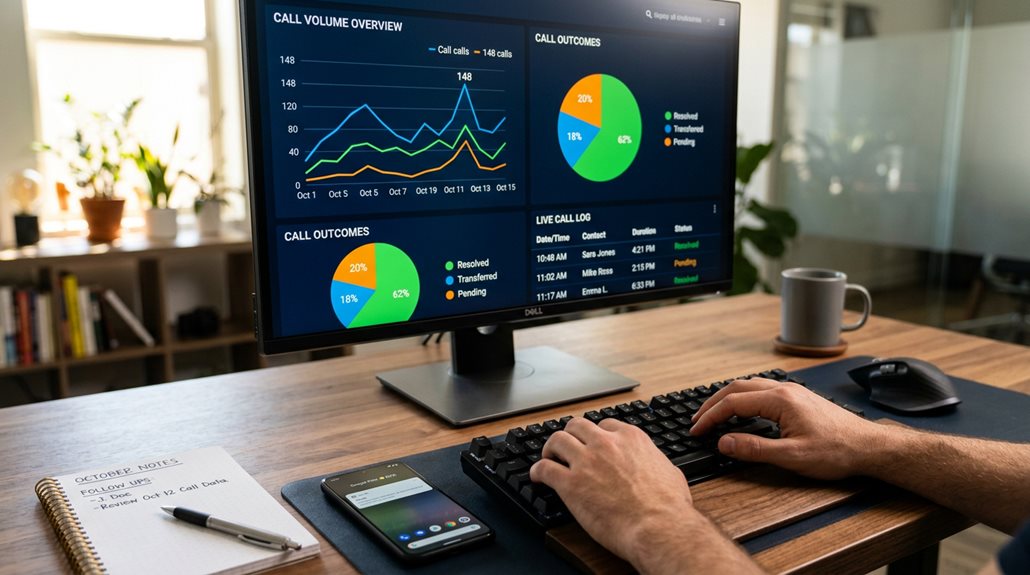
- Review user dashboards and reporting tools for quick insights without complex configurations.
- Consider automation features like call recording, AI integration, and data synchronization to streamline marketing efforts.
What Is Call Tracking and Why Do Small Businesses Need It?
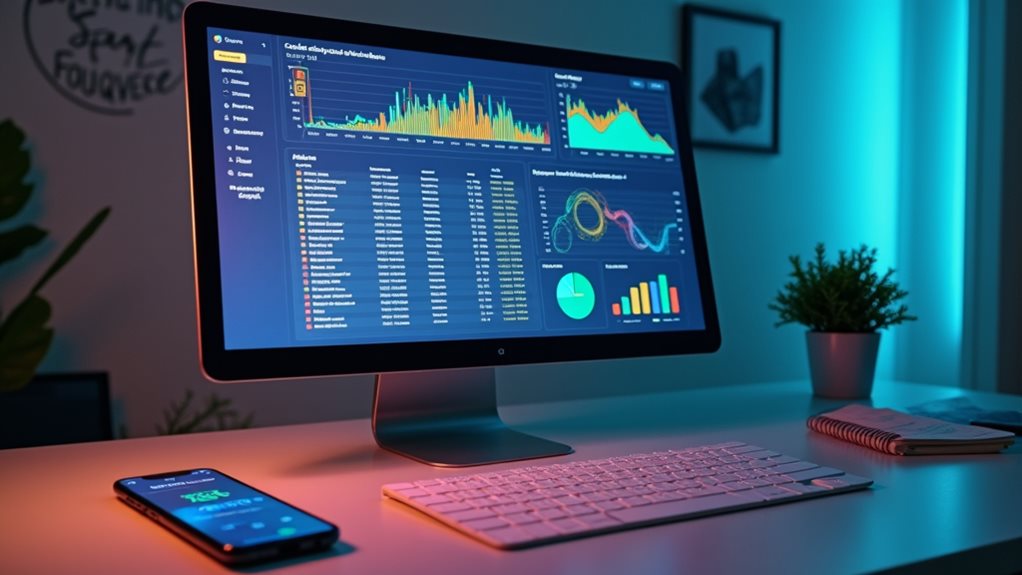
Call tracking might sound like a fancy marketing tool, but for small businesses, it’s a practical way to see which efforts generate inbound calls—and which don’t. It assigns unique numbers for campaign tracking, improves marketing attribution, and enhances lead conversion. Additionally, implementing safe AI strategies can help automate tasks like citation updates and content creation without risking penalties or spam filters. Call recording and call analytics help you gain customer understanding, while CRM integration streamlines follow-up, making your marketing smarter and more effective. Remember, choosing the right web hosting can also impact your website’s speed and SEO, ensuring your call tracking tools perform optimally.
What Features Matter Most in Small Business Call Tracking Tools
When choosing call tracking tools, ease of setup and seamless integration with your existing marketing platforms top the list because, frankly, nobody has time to wrestle with complicated software or duplicate data entry. A well-designed system should also support internal linking strategies, ensuring that your data flows smoothly across platforms and helps optimize your overall marketing efforts. You want a system that quickly connects to your CRM, Google Ads, or HubSpot without requiring a full IT team, or a PhD in tech. Missing out on these features often leads to wasted hours and unreliable data, which is the last thing any small business needs while juggling multiple priorities. Additionally, technical tweaks like structured data and site speed optimization can significantly enhance your tracking accuracy and overall marketing performance.
Ease of Setup
Getting your call tracking setup off the ground shouldn’t feel like launching a spaceship—complex, slow, and requiring a PhD in tech.
Easy setup features like guided onboarding, tutorials, and automated number insertion simplify onboarding, enabling quick deployment.
User-friendly dashboards and minimal configuration, including simple CRM integration, help small teams see immediate results without wasting time on convoluted processes.
Integration Capabilities
Integrations are the backbone of effective call tracking for small businesses, ensuring your data flows smoothly between platforms without requiring constant manual updates. Call tracking integrations like CRM, Google Ads, and third-party software streamline campaign tracking and automation workflows. Key features include API support, adaptable number insertion, and real-time data sync, making attribution accurate and scalable.
| Feature | Benefit |
|---|---|
| CRM & Google Ads integration | Accurate attribution |
| API support & Zapier | Custom workflows |
| Dynamic number insertion | Real-time updates |
How to Choose the Best Call Tracking System for Your Business Goals
When choosing a call tracking system, start by clearly defining your main business goals—whether it’s increasing conversions, better attribution, or improving customer experience—so you can find a solution that aligns with those aims.
Next, assess how well the platform integrates with your existing CRM and marketing tools; smooth data flow saves you from a manual data-entry nightmare.
Finally, consider pricing and scalability upfront, because growth is inevitable, and the last thing you want is a system that costs more as your needs expand or surprises you with hidden fees.
Be aware that local search traffic can sometimes bring in visitors who are not your ideal customers, so aligning your call tracking with your target audience ensures you’re not just measuring traffic, but capturing valuable leads.
Additionally, tracking trends and business metrics allows you to measure SEO progress more effectively, moving beyond daily ranking fluctuations to focus on meaningful growth indicators.
Define Business Goals Clearly
Defining your business goals clearly is the foundational step in choosing the right call tracking system, because without this clarity, you’re fundamentally flying blind—like trying to steer with a map that has no labels. Use this table to align features with your objectives:
| Business Goals | Call Tracking Features & KPIs |
|---|---|
| Increase sales | Call attribution, lead conversion metrics |
| Improve customer service | Conversation analysis, multi-channel tracking |
| Optimize marketing | Measurable data, campaign integration |
Assess Integration Capabilities
Ensuring your call tracking system integrates smoothly with your existing tools is essential for maintaining efficient workflows and accurate data. Focus on compatibility with your CRM, marketing tools, and business systems, supporting automation and real-time data synchronization.
Campaign-level integration with unique tracking numbers improves attribution accuracy and streamlines processes. This helps prevent manual errors and ensures your data remains aligned across all platforms.
Consider Pricing and Scalability
Choosing a call tracking system that fits your business goals means paying close attention to pricing and how well it scales as you grow.
Look for transparent pricing, whether tiered or pay-as-you-go, and consider advanced features that match your growth potential.
Free trials help test scalability, ensuring the system can handle increased call volume without costly surprises.
Top Call Tracking Tools for Small Businesses: Pros and Cons
When selecting a call tracking tool for your small business, it’s essential to weigh the strengths and weaknesses of each option rather than just chasing the lowest price or flashiest features.
Call tracking tools like CallRail, WhatConverts, and CallTrackingMetrics offer different balances of call logs, call data, lead tracking, inbound call management, call attribution, CRM integration, call recordings, and analytics.
Choose wisely. Incorporating automated internal linking can enhance your website’s structure, making it easier for search engines to crawl and index your content effectively.
How to Connect Call Tracking With Your Marketing and CRM Platforms

Connecting your call tracking platform with your marketing and CRM systems is a critical step that often gets overlooked—yet it’s where most value lives.
Call tracking integration, CRM synchronization, and marketing platform connection enable adaptable number insertion, call data transfer, and campaign performance measurement.
API integration and automation workflows guarantee immediate lead attribution, streamline data flow, and enhance overall marketing efficiency.
Strategies to Use Call Tracking Data to Improve Customer Results
Utilizing call tracking data effectively can revolutionize your approach to customer engagement and campaign optimization.
- Focus on lead quality perspectives to direct your marketing spend wisely.
- Use call recordings and sentiment analysis to understand customer objections and satisfaction.
- Track call outcomes and conversion rates to refine messaging and call routing.
- Integrate data with CRM for personalized follow-ups.
- Utilize customer understanding for smarter, more targeted campaigns.
And Finally
Choosing the right call tracking software isn’t about chasing the latest bells and whistles—it’s about aligning features with your goals and integrating smoothly into your existing systems. Focus on reliable data, ease of use, and actionable knowledge. Don’t fall for shiny objects or overhyped promises. With a grounded approach, you’ll turn call data into real results, not just numbers. Remember, in this game, practical over pretty always wins.