15 Free SEO Tools Small Businesses Actually Use
There are around 15 genuinely useful free SEO tools small businesses rely on, like Google Search Console and Google Analytics for technical health and visitor insights, and Google Business Profile for local visibility. Tools like Ubersuggest and Moz Link Explorer help with keyword research and backlink analysis. BrightLocal and Similarweb provide competitive and local SEO perspectives, while SEOquake helps with on-page assessments. Becoming proficient in these resources offers a practical way to improve your site’s performance—stick around if you want all the details.
TLDR
- Small businesses commonly utilize free tools like Google Search Console and Google Analytics for website performance and visitor insights.
- Keyword research and content ideas are generated with AnswerThePublic, Ubersuggest, and Google Keyword Planner.
- Technical site audits are performed using Screaming Frog SEO Spider and SEOquake for on-page and technical SEO issues.
- Local SEO is optimized through Google Business Profile management and tools like BrightLocal for local search performance.
- Backlink analysis and competitive insights are gathered with Moz Link Explorer and Similarweb for comprehensive SEO strategy.
Introduction: How Free SEO Tools Help Small Businesses Grow

Even if you’re operating on a tight budget, free SEO tools can be a crucial factor for small businesses that want to grow organically.
Tools like Google Search Console and Google Analytics offer essential data on search rankings, website analysis, and visitor behavior at no cost.
They help you identify technical issues, monitor local SEO, and refine your search engine optimization strategies effectively—without breaking the bank.
Using Safe AI Strategies for Local SEO Automation, you can leverage these tools to optimize citations, listings, and content creation without risking penalties or spam filters.
Additionally, understanding how to Recover and Restore a Hacked WordPress Site Safely ensures your online presence remains secure and your search rankings are preserved during recovery.
What Are Free SEO Tools and Why Do You Need Them?
Free SEO tools are a practical way to gather essential data without straining your budget, allowing you to monitor your website’s health and performance accurately. They help you identify technical issues, track keywords, and understand user behavior—crucial steps for making informed decisions that actually move the needle. Additionally, you can use measuring calls from your Google Business Profile listings to track how local customers are engaging with your business. It’s also important to consider location page strategies, as creating the right pages can boost your local SEO without causing duplication or ranking issues.
Cost-Effective Optimization
To get your website ranking higher without draining your budget, leveraging free SEO tools is both smart and practical.
For small business optimization, tools like Google Search Console and Google Analytics help with keyword research, site audits, and tracking local SEO efforts. They reveal technical issues and performance metrics, so you can make informed decisions without expensive software—or falling for SEO myths.
Essential Data Insights
Understanding what your website is telling you is essential for making informed decisions that actually improve your search performance.
Free SEO tools reveal key data like website traffic, search queries, backlinks, and technical SEO issues.
Using Google Search Console for Free Website Insights
Google Search Console is a straightforward tool that gives you clear data on how your site appears in search results, including clicks, impressions, and average positions.
It’s especially useful for spotting technical issues like crawl errors or mobile usability problems, which can silently tank your rankings if ignored.
Relying on GSC’s weekly updates helps you track whether your recent SEO tweaks actually move the needle—no fluff, just facts.
Understanding common errors in Google Search Console can help you fix issues faster and improve your site’s visibility in search results. Recognizing how indexing issues affect your pages can also shed light on why some pages are indexed but not ranking well.
Monitoring Search Performance
Monitoring your website’s search performance is one of the most direct ways to gauge whether your SEO efforts are paying off — or if they need adjustment.
Google Search Console provides free observations into your search visibility, including impressions, clicks, and average position.
Regularly reviewing site analytics helps you spot trends, identify opportunities, and guarantee your content reaches the right audience without wasting time chasing false leads.
Identifying Technical Issues
Have you ever wondered why certain pages suddenly disappear from search results or why your site isn’t ranking well? Using Google Search Console, you can identify website issues like crawl errors, index coverage problems, mobile usability, and URL inspection.
- Check the Coverage report for blocked or excluded pages.
- Use URL Inspection to verify specific page indexing.
- Review mobile usability alerts.
- Resolve crawl errors promptly.
Tracking Visitor Behavior With Google Analytics 4
Tracking visitor behavior with GA4 is about understanding what visitors actually do on your website or app—beyond just counting hits. Google Analytics 4 helps small businesses analyze visitor behavior, tracking metrics like page views, session duration, and bounce rate. Recognizing local search traffic and its limitations is also essential to realign your targeting efforts effectively.
Boost Your Local SEO With Google Business Profile
Optimizing your Google Business Profile is one of the most straightforward ways to enhance your local SEO efforts.
- Keep your business info consistent across all online listings.
- Regularly update your profile with accurate hours, photos, and posts.
- Solicit and respond to customer reviews to elevate your reputation.
- Use relevant local keywords to improve local search visibility.
These steps help your profile stand out in local search results.
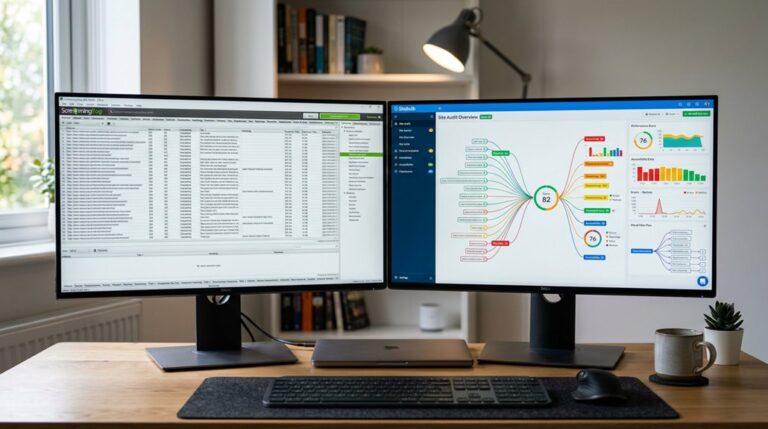
Finding Technical SEO Issues Using Screaming Frog

Using Screaming Frog SEO Spider is one of the most efficient ways to identify technical issues that could be holding your website back in search rankings. It performs an in-depth website audit, revealing broken links, duplicate content, and missing meta tags.
Through crawl analysis, you gain understanding into site health, helping you prioritize fixes like redirect chains or server errors—crucial for steady SEO progress.
Discover Content Ideas With Answerthepublic
AnswerThePublic visualizes search queries by showing the questions, prepositions, and comparisons people use around your keywords, which is priceless for uncovering what your audience genuinely cares about.
You can generate fresh content ideas and identify long-tail keywords that often get overlooked but attract highly targeted traffic.
Relying solely on guesswork won’t cut it—this tool helps you work smarter by focusing on what users are actively searching for, not what you think they should be interested in.
Visualize User Intent
Getting a clear image of what your potential users are asking about can seem like a guessing game, but it doesn’t have to be. Tools like AnswerThePublic visualize user queries, grouping questions by who, what, where, and why.
- Identify user questions
- Uncover longtail keywords
- Understand user intent
- Craft relevant content—this is how you truly listen to your users.
Generate Content Ideas
Finding fresh content ideas can often feel like searching for a needle in a haystack, but certain tools cut through the clutter effectively.
AnswerThePublic visualizes search questions and related content topics, helping you identify audience perspectives, keyword research, and what users are genuinely asking.
Its visual output simplifies understanding search questions, making it easier to craft targeted content that connects with your audience.
Explore Longtail Keywords
Once you’ve identified broad content ideas using tools like AnswerThePublic, the next step is to narrow your focus by exploring longtail keywords. These keywords reveal specific search queries, helping you refine your keyword research.
Consider these points:
- They target user intent more precisely
- They generate relevant content ideas
- They improve SEO by matching actual search questions
- They help you craft targeted FAQ pages for better engagement
Conduct Keyword Research With Google Keyword Planner
Conducting keyword research with Google Keyword Planner is a practical first step in building an effective SEO strategy, especially for small businesses with limited resources.
This free SEO tools resource offers search volume estimates, competition levels, and local SEO keywords filtered by location and device.
It helps you identify high-CPC keywords, giving understanding into commercial intent without breaking the bank.
Get On-Page Insights Using SEOquake by SEMrush

If you want to quickly gauge how well your web pages are optimized, SEOquake by SEMrush offers a straightforward way to get on-page knowledge right from your browser. It analyzes keyword density, links, meta tags, and more.
Use it to:
- Assess page authority
- Compare competitors’ on-page SEO
- Identify optimization gaps
- Review SERP features
This browser extension makes SEO analysis simple and immediate.
Using Ubersuggest’s Free Features for Keyword Ideas
Ubersuggest’s free features provide a straightforward way to generate keyword ideas without overwhelming your daily limits or breaking the bank.
As a small business SEO tool, it offers limited but essential search volume data, keyword suggestions, and SEO difficulty scores.
This helps you quickly identify low-competition, long-tail keywords—crucial for effective keyword research when resources are tight.
Analyzing Backlinks With Moz Link Explorer
Taking a closer look at your backlink profile can reveal a lot about your site’s authority—and where it might be vulnerable. Using Moz Link Explorer, you can perform backlink analysis efficiently by:
- Checking the number of linking domains
- Identifying high-authority backlinks
- Spotting spammy backlinks that could harm your SEO
- Monitoring changes to your backlink profile to maintain or improve domain authority
This helps small businesses stay competitive without over-investing.
Gaining Competitive Traffic Insights With Similarweb Free
Gaining understanding into your competitors’ traffic is a crucial step in refining your digital strategy, and using Similarweb’s free browser extension makes this process straightforward. It offers traffic knowledge, competitor analysis, and a clear view of digital market presence.
You’ll see traffic sources, audience engagement metrics, and geographic visitor data—important details to sharpen your positioning without complex tools or paid plans.
Using BrightLocal’s Free Local SEO Tools to Improve Visibility
Even if you’re already familiar with general SEO practices, improving your local visibility requires targeted tools and focus. BrightLocal’s free local SEO tools help you:
- Check local search results by location
- Monitor your online reputation and reviews
- Identify competitors in your area
- Analyze local rankings to refine your strategy
These perspectives enhance small business visibility and help you stand out in local search results.
How to Combine Free SEO Tools for a Complete Strategy
To build a solid SEO strategy with free tools, you need to combine data sources in a way that highlights actionable knowledge rather than drowning in information.
I’ve found that integrating Google Search Console, Google Analytics, and Ubersuggest helps identify technical issues, user behaviors, and keyword opportunities all at once—saving you from chasing dead ends.
Integrate Data Sources
Combining data from multiple free SEO tools might sound like juggling flaming torches—dangerous and likely to end in chaos—unless you approach it with a plan.
- Export data from Google Search Console, GA4, and keyword research tools into spreadsheets.
- Use data integration techniques to merge understandings from these sources.
- Cross-analyze search impressions, click-through rates, and traffic sources.
- Regularly sync data for a complete view of your small business SEO performance.
Prioritize Actionable Insights
Turning your combined data sources into actionable understanding is where the rubber meets the road. Use free keyword tools like Google Keyword Planner and AnswerThePublic to find high-volume keywords and user questions, guiding targeted content.
Utilize site audit tools and search performance tracking to fix issues and monitor rankings.
While local SEO tools help refine geographic queries—ensuring your efforts translate into real results.
Next Steps: Maximizing Your Free SEO Resources for Growth
Even with a tight budget, you can make notable progress in SEO by leveraging free tools that provide actionable understanding. Focus on:
- Conducting site audits with free site audit tools to fix issues.
- Using free keyword research for targeted content.
- Analyzing competitors’ traffic for small business growth.
- Monitoring rising queries with site performance tools to refine your strategy.
And Finally
By integrating these free SEO tools into your routine, you can make smarter decisions without draining your budget. Focus on data-driven understanding rather than chasing every shiny new tactic, and remember that consistency beats complexity. Avoid common pitfalls like neglecting local SEO or misinterpreting analytics—these are where many stumble. With a clear strategy and steady effort, you’ll gain real traction. After all, good SEO isn’t magic; it’s patience, precision, and a bit of pragmatic persistence.