Proximity Ranking Factors in Google Maps Explained
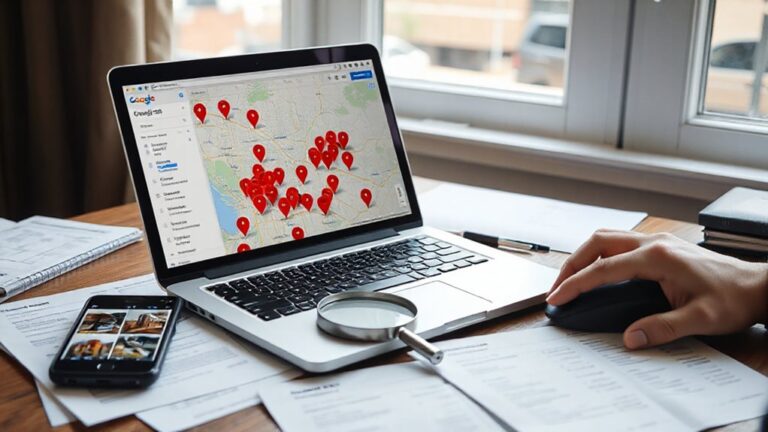
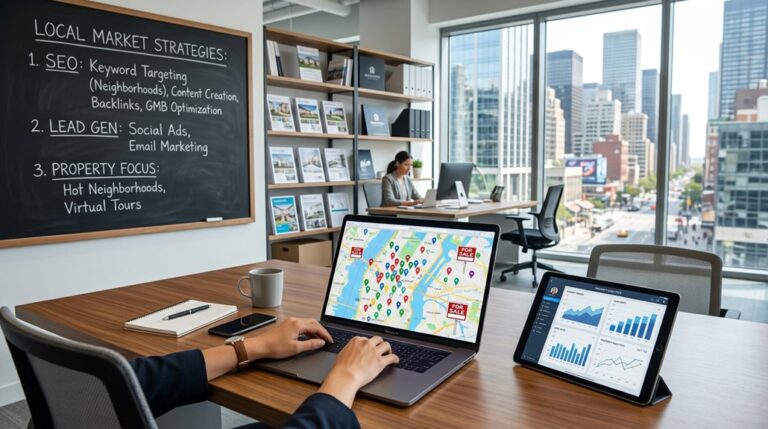
Your proximity in Google Maps ranking starts with your verified address as a fixed anchor. While it accounts for about 15% of ranking, your map presence isn’t just a static circle; it’s a fluctuating visibility radius that expands or shrinks based on your overall ranking strength. In my experience, being the closest business often isn’t enough, as a competitor with roughly 100 more authentic reviews can easily outrank you. The AI now heavily prioritizes behavioral signals like calls and direction requests, so focusing solely on distance is a common trap. Let’s get into how you can actually improve your local visibility.
TLDR
- Proximity contributes about 15% to ranking, based on straight-line distance from your verified business address.
- Its weight increases for mobile searches and decreases when searching from a desktop.
- Ranking visibility declines as the searcher’s distance from your verified location increases.
- Your ranking position creates a dynamic visibility radius that expands or contracts based on local competition.
- Stronger signals like review volume and behavioral engagement can often overcome a competitor’s proximity advantage.
How Proximity Really Works in Google Maps Ranking
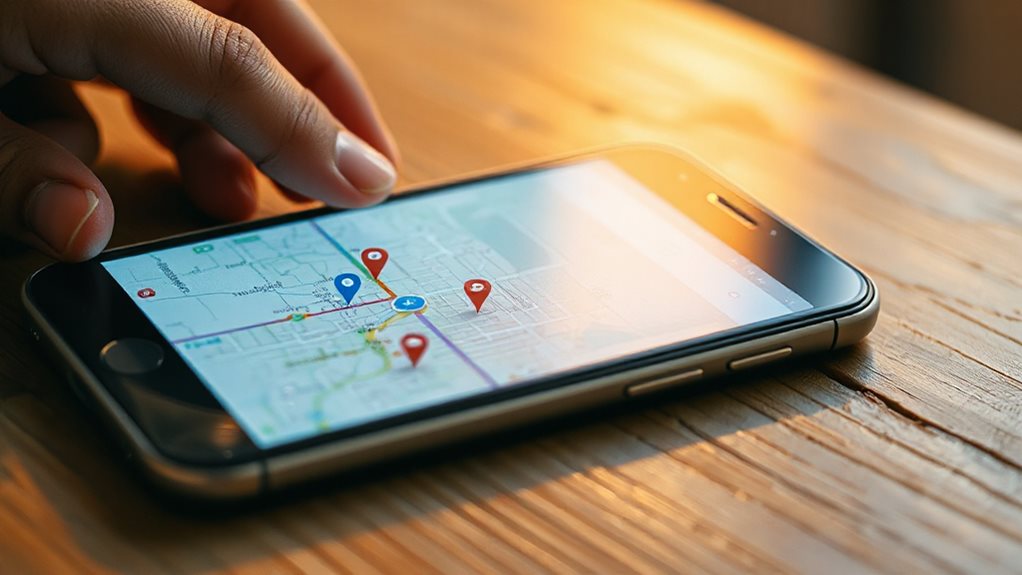
While you might think your proximity ranking is just a fixed fact of your business address, it’s actually a variable calculation that Google adjusts based on who’s searching and what they’re using—and its overall influence has been quietly dialed back. It now contributes about 15% to your ranking, measured as straight-line distance. Its weight shifts higher for mobile searches and drops for desktop, as intent changes. This distance-based factor is part of a broader local algorithm that also considers prominence and relevance. Local rankings also depend heavily on consistent business listings and accurate citations across directories.
Why Your Business Address Is a Fixed Ranking Factor
Your business address functions as a fixed anchor for your proximity ranking, which might feel limiting but actually provides a stable foundation you can build on.
Google uses your verified location for distance calculations, even if you hide it. I’ve seen businesses try to game this; they just weaken their own map pin. Ranking declines with distance from this verified address, so your strongest visibility is closest to your physical location.
Make sure to keep your profile accurate and active across platforms so the address and other details remain consistent.
When Being Closest Isn’t Enough: How Reviews Beat Proximity

The hard truth about ranking in Google Maps is that proximity often plays second fiddle to the weight of your reviews, which can feel counterintuitive when you’re the closest business to a searcher.
I’ve seen volume outweigh ratings; having roughly 100 more reviews than competitors is a stronger signal. Actively request reviews and respond thoughtfully to all feedback—it proves ongoing relevance to Google’s algorithm, pushing you past nearer businesses. Optimizing your Google Business Profile with accurate info, images, posts, and targeted local keywords also helps attract leads and supports higher local rankings by demonstrating local relevance.
How Your Search Ranking Creates a ‘Visibility Radius’
Your ranking directly shapes your visibility radius, determining how far from your physical location potential customers can see you in the local pack.
A higher position pushes your effective geographic reach outward, while a lower one shrinks it to just the immediate blocks, which is why focusing solely on proximity often leads to disappointing results.
I’ve seen businesses use service-area settings and hyper-local content to artificially expand this radius, a practical move that counters the algorithm’s natural distance thresholds.
Improving local citations and optimizing your business profile can further extend that reach by strengthening relevance and credibility (local citations).
Ranking Dictates Visibility
While it might feel like your Google Maps listing is visible to everyone, it’s actually working within what I think of as a ‘visibility radius’—a geographical boundary where your ranking is strong enough to be seen.
Your position within this radius shifts based on a searcher’s distance, their device, and local competition. In effect, your ranking dictates who can find you on the map.
Position Versus Distance Thresholds
Although you can’t control where a potential customer is standing when they search, your Google Maps ranking directly shapes how far away they can be and still see you, effectively creating a ‘visibility radius’ around your location.
I see clients hope for a 10-mile radius, but grid trackers typically show a more practical 2-3 miles where you rank in the top 10. A higher position simply pushes this boundary farther.
Geographic Reach Fluctuations
Because your Google Maps ranking directly shapes your geographic reach, it’s helpful to think of your position as creating a fluctuating ‘visibility radius’ around your pin.
I see a #1 rank work strongly nearby, but drop to #10 just five miles away. That 50% visibility drop from state to city searches is normal; your pin’s effective reach isn’t fixed, but breathes with every algorithm tweak and searcher’s zoom level.
Practical Ways to Grow Your Local Search Visibility Footprint
To grow your visibility footprint, start by fully optimizing your Google Business Profile for relevance, ensuring your primary category, services, and business hours are thoroughly accurate.
Next, strengthen your prominence signals by actively generating authentic reviews and building local backlinks, which I’ve found many businesses neglect in favor of chasing quick fixes.
This two-pronged approach systematically expands your reach, moving you beyond just showing up for searches right next door.
Optimize Profile Relevance
While it’s tempting to stuff your Google Business Profile with keywords, the real work of optimizing profile relevance is much more straightforward—it’s about clearly and accurately communicating what you do, for whom, and why it matters.
Choose specific, accurate categories; write a clear description with natural keywords; and use attributes. This directly answers search intent, which the algorithm rewards over keyword stuffing.
Strengthen Prominence Signals
Beyond optimizing your profile’s relevance, you’ll want to build a stronger reputation that Google and your customers can’t ignore. Actively earn positive reviews and respond to them. Secure consistent local citations and listings. Pursue quality backlinks from community sites, not bought links.
Regular posts and engagement also signal a legitimate, active business. This prominence isn’t magic; it’s the slow, steady work of being a real entity online.
Optimizing Business Relevance to Complement Location
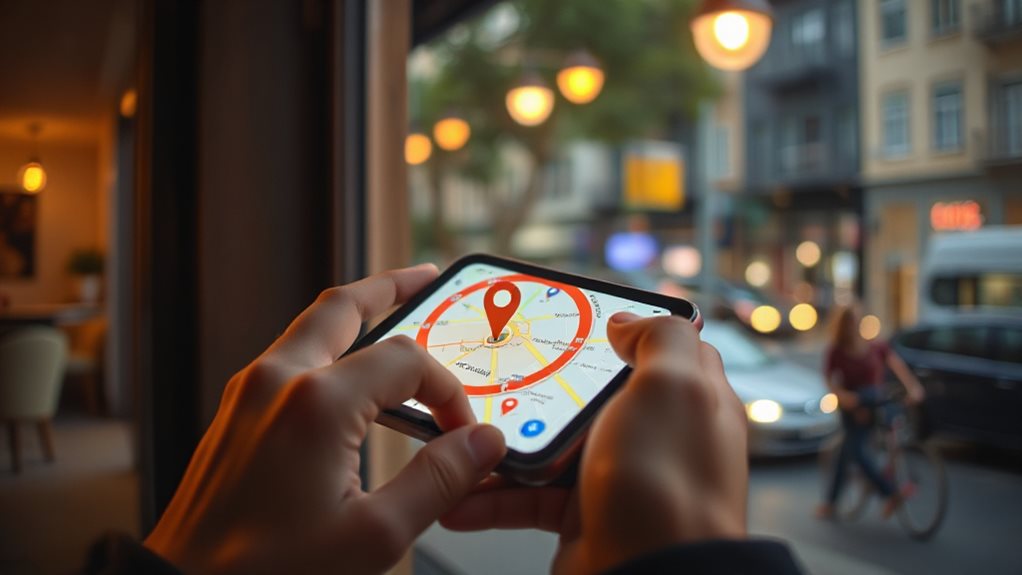
Think of your proximity to a customer as the first date; you’ve got to get their attention, but your business relevance is what makes them stay.
You solidify this by nailing your primary Google Business Profile category—it’s the top ranking factor after location. I see businesses dilute their relevance with too many categories; be precise.
Then, support it with detailed attributes, local content, and schema markup to prove you’re the obvious solution nearby.
The Proximity Trap: Common Local SEO Mistakes to Avoid
Because proximity acts as a foundational filter in Maps, it’s easy to assume being close is enough, but that’s where many businesses fall into a trap.
I’ve seen inconsistent NAP details or a missing physical address immediately filter you out, despite your location.
You also can’t ignore popularity; real engagement often overcomes a minor distance gap.
Relying solely on proximity is a classic, and costly, oversight.
Local SEO Strategies for When You’re Not the Closest Option
While proximity is a powerful initial filter, I’ve found that businesses a few blocks further away can consistently outrank the closest option by building a stronger overall profile.
Focus ruthlessly on GBP completeness, review quality, and NAP consistency. Then, build prominence through local citations and authoritative backlinks—these signals combine to overcome a distance disadvantage far more effectively than chasing every minor Google update ever will.
Visualizing Your Rankings With Local Search Grid Tracking
To truly understand your local search visibility, you must regularly look beyond a single ranking check from your office IP address—a surprisingly common mistake that creates a dangerously incomplete image.
I use grid tracking tools to simulate searches from hundreds of points in your service area. The resulting heatmap, showing green, yellow, and red zones, instantly reveals your actual visibility gaps and geographic strengths.
Where Proximity and Local Search Are Headed Next
Looking ahead, you’ll find that the biggest shifts in proximity and local search won’t just be about getting closer on a map—they’ll be driven by how AI interprets your entire digital footprint, which means your old SEO checklist is becoming dangerously incomplete.
AI now prioritizes behavioral signals like calls and directions over mere proximity.
To stay visible, you must optimize for entity richness and hyperlocal content across all platforms, not just Google.
And Finally
So, proximity is a fixed factor, but it’s not the final word. I’ve seen countless businesses obsess over it while neglecting their reviews and content, which is a surefire way to lose to a competitor who’s slightly farther but far more relevant. Focus on expanding your visibility footprint through genuine local engagement and a stellar profile, because that’s what truly moves the needle when someone searches nearby.