Best Rank Tracking Tools for Watching Your Rankings Move
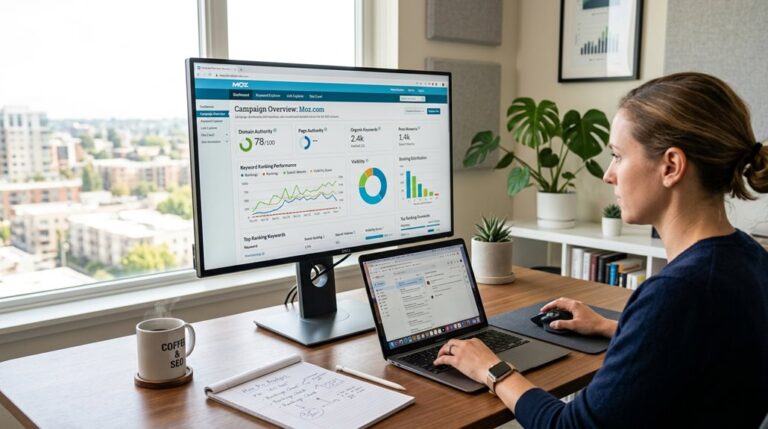
For tracking your rankings effectively, I recommend tools like AccuRanker, SEMrush, and Ahrefs, which offer real-time updates, accurate data, and support for local and device-specific searches. They let you spot fluctuations early, helping you adjust strategies before small dips become major setbacks. Automated alerts and SERP analysis are must-haves, but beware of tools promising overnight miracles—consistent, data-driven monitoring is what counts. Stick with proven platforms, and you’ll learn how to stay ahead, reliably.
TLDR
- Choose tools that offer comprehensive SERP monitoring, real-time updates, and accurate ranking data across devices and locations.
- Prioritize features like automated alerts, customizable reports, and integration with analytics platforms for proactive tracking.
- Consider cost, scalability, and whether the tool supports multi-location and local search rankings.
- Compare top tools like Semrush, Ahrefs, AccuRanker, and Nozzle based on accuracy, speed, and additional insights.
- Regularly analyze trends and fluctuations to detect issues early and adjust your SEO strategies effectively.
Why Rank Tracking Matters for SEO Success

Tracking your keyword rankings daily might seem like overkill, but it’s actually one of the most reliable ways to see whether your SEO strategies are making a difference. Accurate rank tracking reveals ranking fluctuations caused by algorithm updates, offering useful ranking perspectives. Utilizing white-label reports from rank tracking platforms built for agencies allows for seamless client communication and professional presentation of data. Additionally, monitoring local search performance can help identify when local businesses are ranking for keywords that drive traffic but lack conversion potential. Consistent ranking reports and monitoring search visibility across devices help you make data-driven decisions, ultimately improving organic traffic and SEO success.
Key Features to Look for in Rank Tracking Tools
When evaluating rank tracking tools, the key features you should prioritize are those that deliver accurate, actionable data without requiring a PhD in data science. Look for comprehensive SERP monitoring, data accuracy, location tracking, device segmentation, and SERP feature tracking. Real-time updates, customizable reports, and ranking data reliability guarantee you understand search visibility and can make informed decisions efficiently. Additionally, ensuring the tool offers top browser extensions for fast SEO checks can significantly speed up your workflow by providing quick insights without opening full tools. To truly assess the effectiveness of your SEO efforts, it’s also important that the tools provide accurate data that reflects real-world search engine behavior, helping you identify genuine ranking improvements.
How to Choose the Best Rank Tracker for Your Needs
Choosing the right rank tracker means aligning its features with your specific goals and budget, rather than chasing every shiny tool on the market.
You need a solution that can handle your site’s scale—whether that’s a handful of keywords or thousands—and supports multi-location and device tracking to reflect real-world search behavior.
Assessing data quality and accuracy, especially for small sites, can significantly impact your ability to make informed decisions and track progress effectively. Additionally, understanding the pros and cons of various tools can help you select the most reliable option for your needs.
Skipping this step often leads to wasted money on tools that don’t fit your needs, or worse, missing critical understanding when algorithms shift unexpectedly.
Match Features to Goals
Understanding which rank tracking features align with your goals can mean the difference between actionable insights and data overload.
Focus on tools with local ranking accuracy, thorough SERP data, and real-time updates if timely responses matter.
Prioritize multi-device tracking, AI visibility monitoring, and seamless integration with analytics to guarantee your strategy remains sharp and adaptable.
Assess Budget and Scale
Exploring the world of rank tracking tools without considering your budget is like trying to fit a square peg in a round hole—you might find something that works temporarily, but it rarely scales well.
Many opt for a budget-friendly rank tracker with tracking limits that support unlimited keywords or scalable SEO tools.
Prioritize plan flexibility and growth-friendly tools that align with your needs and budget.
Top Rank Tracking Tools Compared: Pros and Cons
When comparing top rank tracking tools, you need to evaluate their feature sets and how well those features align with your specific needs, whether it’s daily updates, historical data, or local tracking.
Price is often a deciding factor, but cheaper isn’t always better if it lacks critical capabilities or scalability; value is about what you get for your investment.
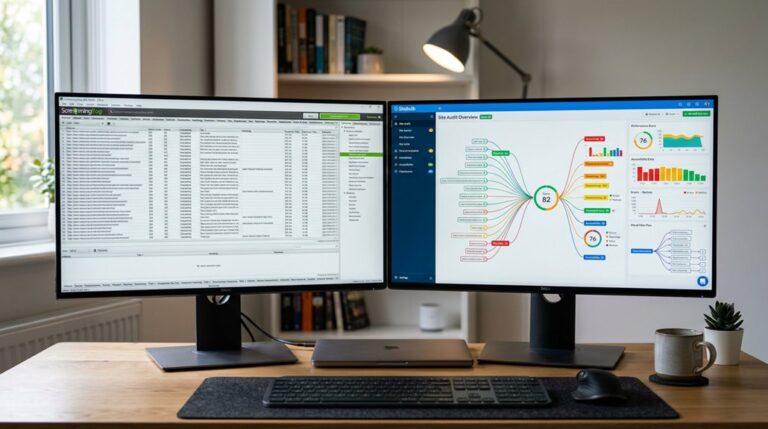
Additionally, considering the comparative analysis of site crawlers can help identify tools that excel in crawl speed, reporting, and usability—key factors for effective monitoring.
Feature Set Comparison
Comparing the feature sets of top rank tracking tools reveals that each one has its strengths and blind spots—no one-size-fits-all solution here. Here’s a quick look:
| Tool | Key Features | Best For |
|---|---|---|
| Semrush | AI visibility, daily updates, SERP analysis | Market analysis and competitive perspective |
| Ahrefs | Keyword precision, historical data | Keyword tracking and SERP history |
| SE Ranking | Local SEO, affordable daily tracking | Local campaigns and budget-conscious plans |
| AccuRanker | Speed, real-time updates | Rapid responses during algorithm shifts |
| Nozzle | SERP elements, paid ads, snippets | Granular SERP environment insights |
Pricing and Value
Understanding the true value of a rank tracking tool often hinges on its pricing and features, not just the sticker price.
For instance, Semrush and Ahrefs offer all-encompassing SEO rank tracker plans with real-time updates, but at higher costs—reflecting their SEO data analysis power.
Meanwhile, more affordable SEO tools like SE Ranking provide scalable SERP monitoring, balancing tracking software affordability with essential understanding.
Optimizing Your SEO Strategy With Rank Data
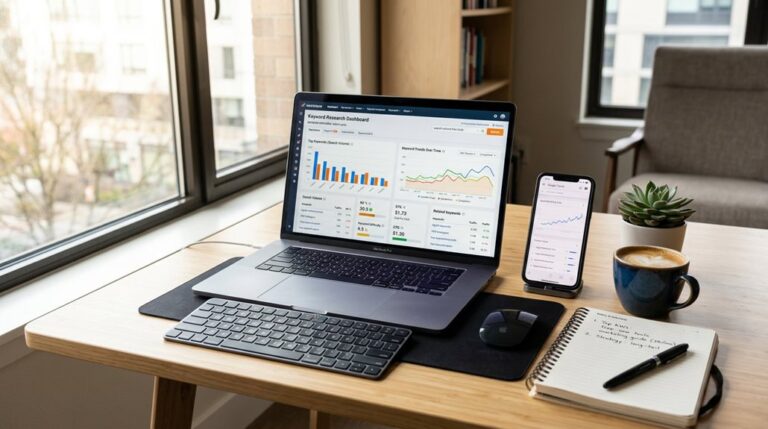
Leveraging rank data effectively can convert your SEO approach from guesswork to strategic precision. With accurate ranking data, you can monitor keyword rankings and track ranking fluctuations across devices and locations, enabling targeted adjustments.
Daily rank updates help you respond swiftly to algorithm shifts. While analyzing ranking trends over time reveals long-term growth opportunities and early warning signs, improving your SEO performance.
Common Challenges in Rank Tracking and How to Fix Them

Tracking rankings isn’t as straightforward as it might seem, and many businesses run into problems with inaccurate data or inconsistent updates.
Issues with ranking accuracy often stem from limited SERP feature coverage, regional differences, and low update frequency.
Search engine personalization and device-specific rankings further complicate local rank tracking, making data reliability a challenge—unless you choose tools prioritizing data consistency and all-inclusive SERP analysis.
Integrating Rank Tracking With Your Analytics Platforms
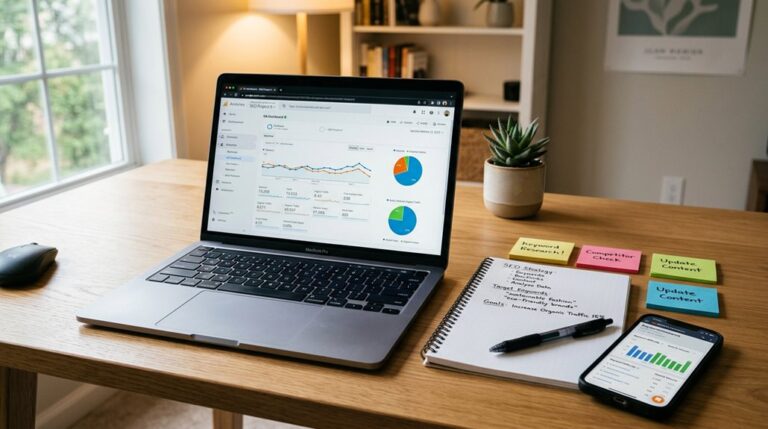
Connecting your rank tracking tools with analytics platforms like Google Analytics and Search Console isn’t just a technical checkbox—it’s a strategic move that lets you see the full image of your SEO efforts. Data synchronization through API connections enables real-time monitoring, performance observations, and thorough reporting, helping you quickly identify correlations between ranking changes and user engagement.
| Rank Tracking Data | Analytics Platforms Observations |
|---|---|
| Rankings fluctuations | Traffic and bounce rates |
| Keyword performance | Conversion metrics |
| Data updates | User behavior trends |
Pricing and Budgeting: Finding the Right Fit
Finding the right rank tracking tool for your needs often boils down to balancing features with budget—something that sounds straightforward but can quickly become a maze of options and fine print.
With SEO tools budget ranging from $29 for basic plans to over $400 for enterprise features, focus on affordability and value.
Budget-friendly SEO tools like SERPWatcher and Wincher deliver reliable tracking software costs without overpaying for unused features.
Final Tips to Stay Ahead With Effective Rank Monitoring

Staying ahead in SEO requires more than just setting up a rank tracking tool and hoping for the best. Regularly review your ranking changes and trends to catch ranking fluctuations early.
Use automated alerts for tracking updates, focus on key keywords, and compare performance over time.
Combining SEO monitoring with CTR data helps you refine your tracking strategy and spot issues before they become crises.
And Finally
Choosing the right rank tracking tool isn’t about chasing every new feature but about finding what reliably helps you monitor progress and make informed decisions. Focus on accuracy, ease of use, and integrations that fit your workflow. Remember, no tool will fix poor SEO overnight—consistent, data-driven adjustments are key. Stay pragmatic, avoid shiny distractions, and use your rank data to sharpen your strategy. That’s how you turn rankings into real results.