Local SEO for Ecommerce Stores With a Physical Location
To optimize local SEO for your ecommerce store with a physical location, claim and consistently update your Google Business Profile, focusing on accurate info like hours, services, and photos, while encouraging genuine reviews. Build local backlinks and include location-specific keywords on your site, especially in schema markup and landing pages. Make sure your website is mobile-friendly, loads fast, and uses structured data to stand out in local results. If you’re ready to cut through the noise, what follows will clarify each step.
TLDR
- Claim and optimize your Google Business Profile to enhance local visibility and attract nearby customers.
- Create location-specific landing pages with local keywords and embed Google Maps for better search relevance.
- Collect and respond to customer reviews to build reputation and improve local search rankings.
- Ensure your website is mobile-friendly, fast, and uses schema markup for local SEO enhancements.
- Leverage local backlinks, community engagement, and voice search optimization to maximize local ecommerce exposure.
Why Your Store Needs Local SEO to Appear in Google Maps

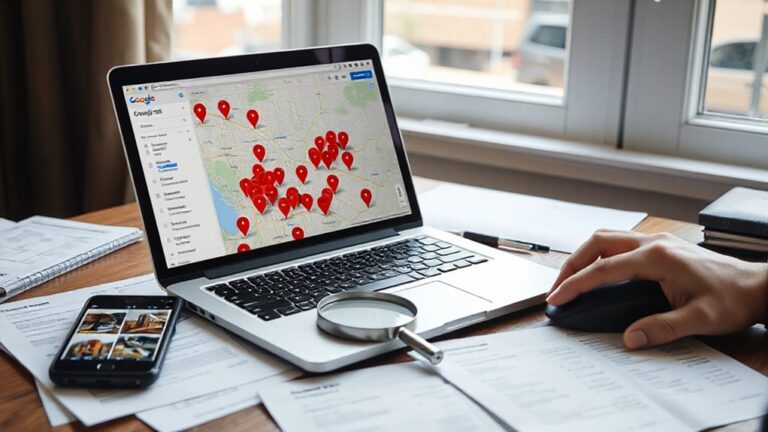
Even if your store isn’t downtown, ignoring local SEO and Google Maps optimization is a mistake. Claiming your Google Business Profile and ensuring NAP consistency enhances your local search rankings.
This helps your physical store appear in local pack results. Since over 50% of “near me” searches lead to store visits within 24 hours, strong Google Maps visibility is essential.
How to Optimize Your Website for Local Search and Drive Traffic
Optimizing your website for local search isn’t just about stuffing keywords into your pages; it’s about making sure search engines understand where you’re located and what you offer in that area. Use location-specific landing pages, optimize for mobile, and include local keywords. Enhance your local business listings with schema markup and embed Google Maps to increase local search visibility and drive traffic. Incorporating safe AI strategies can help automate these tasks effectively without risking penalties or spam filters. Additionally, regularly monitoring and recovering your site after potential hacks ensures your online presence remains trustworthy and secure, safeguarding your search rankings and customer trust.
Using Google My Business to Attract Nearby Customers
Google My Business (GMB) is perhaps the most direct way to connect with nearby customers actively searching for your products or services.
By optimizing your GMB profile, setting accurate service-area boundaries, and regularly updating hours and photos, you enhance local search visibility.
Encouraging local reviews and sharing local updates elevates your local search rankings and attracts nearby customers, making your presence more tangible and trustworthy.
Understanding how local search drives traffic but misses value can help you realign your strategies to attract high-quality, relevant customers. Additionally, implementing SEO timelines and expectations helps you remain patient and strategic as you wait for these efforts to pay off.
Boost Your Local Reputation With Reviews and Backlinks

Building a solid reputation locally hinges on two key elements: customer reviews and backlinks. To enhance your local search rankings, focus on:
- Gathering authentic feedback and responding to reviews
- Securing regional backlinks from credible sources like local blogs and directories
- Engaging with the community through events and influencer partnerships
- Monitoring your brand search volume and user engagement patterns, as increased direct searches can boost your local visibility and authority brand search volume.
Regularly auditing your SEO efforts ensures that your strategies remain effective and aligned with your goals, helping you identify areas for improvement and capitalize on new opportunities SEO performance. These strategies build trust, credibility, and improve your local reputation effectively.
Get Your Site Ready for Mobile and Voice Search for Local Customers
Since most local searches now happen on mobile phones or through voice commands, making sure your website is ready for these interactions is essential. Focus on mobile optimization with a mobile-friendly website, responsive design, and fast load times. Use structured data markup for local snippets, optimize your Google My Business profile, and incorporate conversational keywords to improve voice search relevance for local queries. Additionally, understanding mobile-first indexing helps you ensure that your site is crawled and ranked effectively on mobile devices.
And Finally
Getting your local SEO right isn’t just about ticking boxes—it’s about understanding what genuinely drives foot traffic and local sales. Focus on accurate listings, fast mobile sites, and authentic reviews, because these are the signals Google trusts most. Don’t fall for quick fixes or over-optimizing; instead, build a consistent, genuine presence. With a disciplined approach grounded in real-world tactics, you’ll see results—no magic required, just good, solid SEO practice.