Best Backup Plugin for WordPress Sites
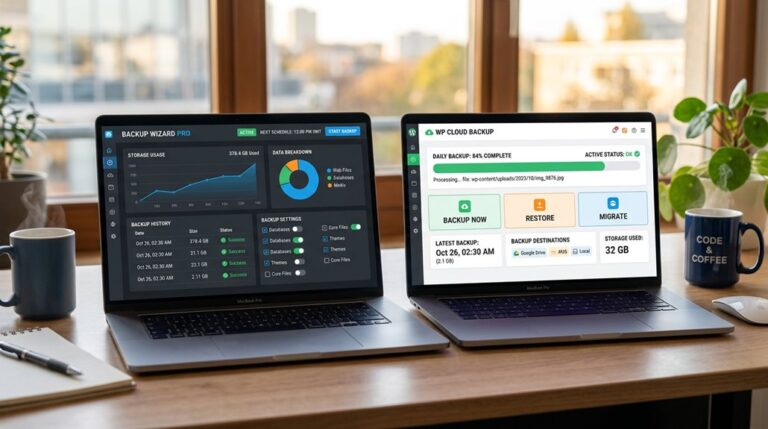
The best WordPress backup plugin combines reliability, automation, and offsite storage options, such as UpdraftPlus or BackWPup, which support scheduled backups, remote destinations like Google Drive or Amazon S3, and easy restore processes. Look for those with strong security features, including encryption, and ongoing support. Avoid plugins that lack regular updates or proper testing tools—trust me, you don’t want to find out your restore process is a myth during a crisis. Keep going, and you’ll learn how to make these tools work best for you.
TLDR
- Choose plugins that support scheduled backups, remote storage options, and one-click restore features.
- Prioritize reputable plugins with regular updates and strong security measures like encryption.
- Ensure the plugin offers multiple storage destinations, such as cloud services like Google Drive or Amazon S3.
- Select plugins with user-friendly interfaces and compatibility with your website’s hosting environment.
- Look for plugins that allow incremental backups and automate backup schedules aligned with site activity.
Why Backups Are a Must for Your WordPress Site

While it might seem obvious, many website owners still neglect regular backups until disaster strikes—and by then, it’s often too late. A solid backup guarantees you can quickly restore your WordPress site after data loss, hacking, or server failure. Using offsite cloud storage, automated backups, and a reliable plugin helps protect site security, especially during migration or updates. Additionally, having a well-structured internal site hierarchy ensures that critical pages remain easily recoverable and accessible in case of technical issues. When evaluating backup solutions, considering performance, support, and pricing can help determine if a provider like WP Engine is a worthwhile investment for your needs.
What Features Matter Most in a Backup Plugin
When choosing a backup plugin, the features it offers can make or break your ability to recover quickly and efficiently after an issue. Look for scheduled backups, remote storage options, and one-click restore for faster recovery. A safe AI strategy is also essential to ensure your backups do not trigger spam filters or penalties, especially if you incorporate automation into your workflow. Make certain it supports incremental backups, comprehensive security features like backup encryption, and offers a user-friendly interface with staging support to streamline your workflow. Additionally, monitoring SEO progress and aligning your backup strategy with your overall business metrics can help ensure your site remains resilient and well-maintained over time.
How to Choose the Right Backup Plugin for Your Needs
When choosing a backup plugin, it’s essential to evaluate whether it supports your preferred storage options like Google Drive or Amazon S3. Because offsite backups prevent total disaster if your server goes down.
You should also assess how often it backs up your site and whether it offers incremental backups—these save time, server resources, and reduce manual work, making your life easier. SEO metrics that truly show progress can help you measure the effectiveness of your backup strategy over time.
Finally, reliability matters; check user reviews, update frequency, and if the plugin plays nicely with your current WordPress version, since poor compatibility can turn a backup into a hassle rather than a safety net. Understanding how proximity influences Google Maps rankings can help you better tailor your local SEO strategies.
Compatibility With Storage Options
Choosing a backup plugin without considering its storage compatibility is like buying a car without checking if it fits your garage—inevitably, you’ll run into problems.
Look for plugins supporting cloud storage, remote storage, and various backup destinations. Make certain they handle multiple storage options, external storage, and offsite backups, so your data stays protected across platforms and storage support is seamless and reliable.
Backup Frequency and Scope
Determining the right backup frequency hinges on how often your website’s content changes and how critical it’s to preserve every update. Consider these:
- Daily or hourly for active sites.
- Weekly or monthly for less frequent updates.
- Use automated backups for consistency.
- Match backup scope—full site, database, media—to your recovery needs—site recovery, media backups, or database backup.
Step-by-Step: Setting Up Automated WordPress Backups
Setting up automated backups for your WordPress site might seem straightforward, but skipping even one step can lead to data loss or restore headaches later. You need to configure your plugin setup, schedule automatic backups, and select remote storage like Google Drive for offsite backup security. A cost-effective strategy can help maximize your ROI by balancing budget and backup reliability. Don’t forget to test the backup process and monitor logs regularly to guarantee reliable restore options.
Troubleshooting Backup Failures and Finding Support

Backup failures often stem from hosting resource limits like low PHP memory or short execution times, which you can usually fix by adjusting server settings or splitting large backups into smaller chunks.
When troubleshooting, I recommend checking error logs, ensuring your plugins are current, and confirming you have enough storage space—skipping these steps is how many make issues worse.
If problems persist, support resources such as detailed documentation, forums, or premium support options often hold the key, but don’t expect a silver bullet; patience and a systematic approach are your best allies.
Common Backup Error Causes
When backups fail, it’s usually because something in the server environment isn’t quite playing nice—whether that’s insufficient memory, limited disk space, or overly restrictive permissions.
Common causes include:
- Server resource limitations, like low memory or disk space issues
- Outdated or incompatible plugin versions with PHP or WordPress
- Large site backups exceeding zip split sizes or server limits
- Incorrect server permissions blocking file creation or storage
Accessing Support Resources
Accessing support resources effectively can make all the difference when troubleshooting backup failures. Support channels like documentation, FAQs, and forums are essential, but premium plugins like UpdraftPlus offer dedicated support, including error logs and plugin support. Use the table below to identify common issues, support options, and best practices for plugin updates and resolving conflicts.
| Issue | Support Resource | Best Practice |
|---|---|---|
| Backup errors | Error logs, documentation | Review logs, update plugins regularly |
| Plugin conflicts | Support channels, forums | Disable conflicting plugins, seek plugin support |
| Troubleshooting delays | Customer support, FAQ | Use quick support options, follow guides |
| Complex issues | Ticket systems, support | Contact premium support for urgent help |
Connecting Cloud Storage to Protect Your Backups

Connecting cloud storage to your backup system is a straightforward but essential step in safeguarding your WordPress data. Imagine:
- Linking your backup plugin to Google Drive, Dropbox, or Amazon S3 using API keys.
- Ensuring offsite backups are scheduled automatically, freeing you from manual uploads.
- Protecting data even if your server faces failure or attack.
- Enhancing disaster recovery and backup security with remote storage.
How Regular Backups Keep Your WordPress Site Safe
Regular backups serve as your safety net, ensuring you always have a recent copy of your site’s data ready to restore if disaster strikes.
Implementing a consistent backup routine with automatic backups, database backups, and backup scheduling enhances WordPress site safety.
Storing backups in cloud storage and local locations prevents data loss, enabling quick website recovery and strengthening site security.
Best Practices for Maintaining Your Backup Strategy
Maintaining an effective backup strategy isn’t a set-it-and-forget-it task; it requires ongoing attention and adjustment to stay ahead of potential issues.
- Set a consistent backup schedule with automatic backups to match your site’s activity level.
- Use remote storage like cloud services to diversify data protection.
- Regularly test your restore process to confirm backups work.
- Keep plugins updated to avoid vulnerabilities.
And Finally
In the end, a reliable backup plugin isn’t just a safety net; it’s part of your site’s backbone. Stick with reputable options that fit your needs, automate backups, and connect to cloud storage—these are non-negotiable. Regularly test your restores to guarantee everything works when it counts, and avoid shortcuts that leave gaps. A disciplined, well-structured backup routine saves you headaches, time, and potentially, your reputation. Don’t assume it’s all set and forget—because it isn’t.